

TB-500 is already one of the most effective regenerative peptides available. Stack it with the right compounds, and you are targeting the healing process from multiple biological angles simultaneously. Stack it wrong, and you are either wasting money on redundant mechanisms or, in some cases, amplifying risks that a single compound would not carry alone.
Most stacking guides online read like shopping lists. This one reads like a protocol. The difference matters when you are trying to get back from a serious injury, not just optimizing for marginal gains.
Here’s what this article covers:
- Why stacking TB-500 makes mechanistic sense and when it genuinely adds value
- The Wolverine Stack: TB-500 and BPC-157, the most validated combination
- Growth hormone stacks: CJC-1295, Ipamorelin, and where TB-500 fits
- Advanced combinations for specific recovery goals, including GHK-Cu and Ipamorelin
- What combinations to avoid and why more is not always better
At Natura Dermatology & Cosmetics, we build every peptide therapy protocol around your specific goals and health history. If stacking is appropriate for you, our providers design it properly, not based on what’s trending in a forum.
Why Stacking TB-500 Makes Sense
Peptide stacking is not about taking more compounds and hoping for bigger results. The legitimate rationale for combining peptides is mechanistic complementarity: each peptide targets a different rate-limiting step in the same biological process. When those steps do not overlap, you get additive coverage. When they do overlap, you get redundancy at best and amplified side effects at worst.
TB-500 earns its place in combination protocols because its mechanism is genuinely distinct from most other regenerative peptides. Its primary action is actin regulation and cell motility, driving cell migration to damaged tissues systemically, promoting new blood vessel formation, and modulating inflammatory cytokines at the cellular level. It does not directly stimulate growth hormone receptors, does not drive collagen synthesis through fibroblast signaling pathways the way BPC-157 does, and does not influence IGF-1 production the way CJC-1295 does.
That separation of mechanisms is exactly what makes stacking valuable. Each addition addresses a different bottleneck in the healing cascade.
When Stacking Genuinely Adds Value
Stacking is not the right call for every patient or every recovery goal. It adds real value in these scenarios:
- Severe or multi-tissue injuries, where a single peptide cannot address all the biological rate-limiting steps simultaneously
- Chronic injuries with established fibrosis, scar formation, and systemic inflammation that require both local and systemic intervention
- Post-surgical recovery, where accelerated wound healing, collagen synthesis, and tissue regeneration are all needed in parallel
- High training volume, where systemic recovery and growth hormone support both matter, alongside tissue repair
Stacking also adds complexity, cost, and compounded safety considerations. More is not automatically better. The goal is targeted coverage of distinct pathways, not maximizing the number of compounds in your protocol.
The clinical principle: If two peptides push the same biological pathway, you are more likely to amplify side effects than healing outcomes. If they push different pathways toward the same recovery goal, the combination is mechanistically sound.
The Wolverine Stack: TB-500 and BPC-157
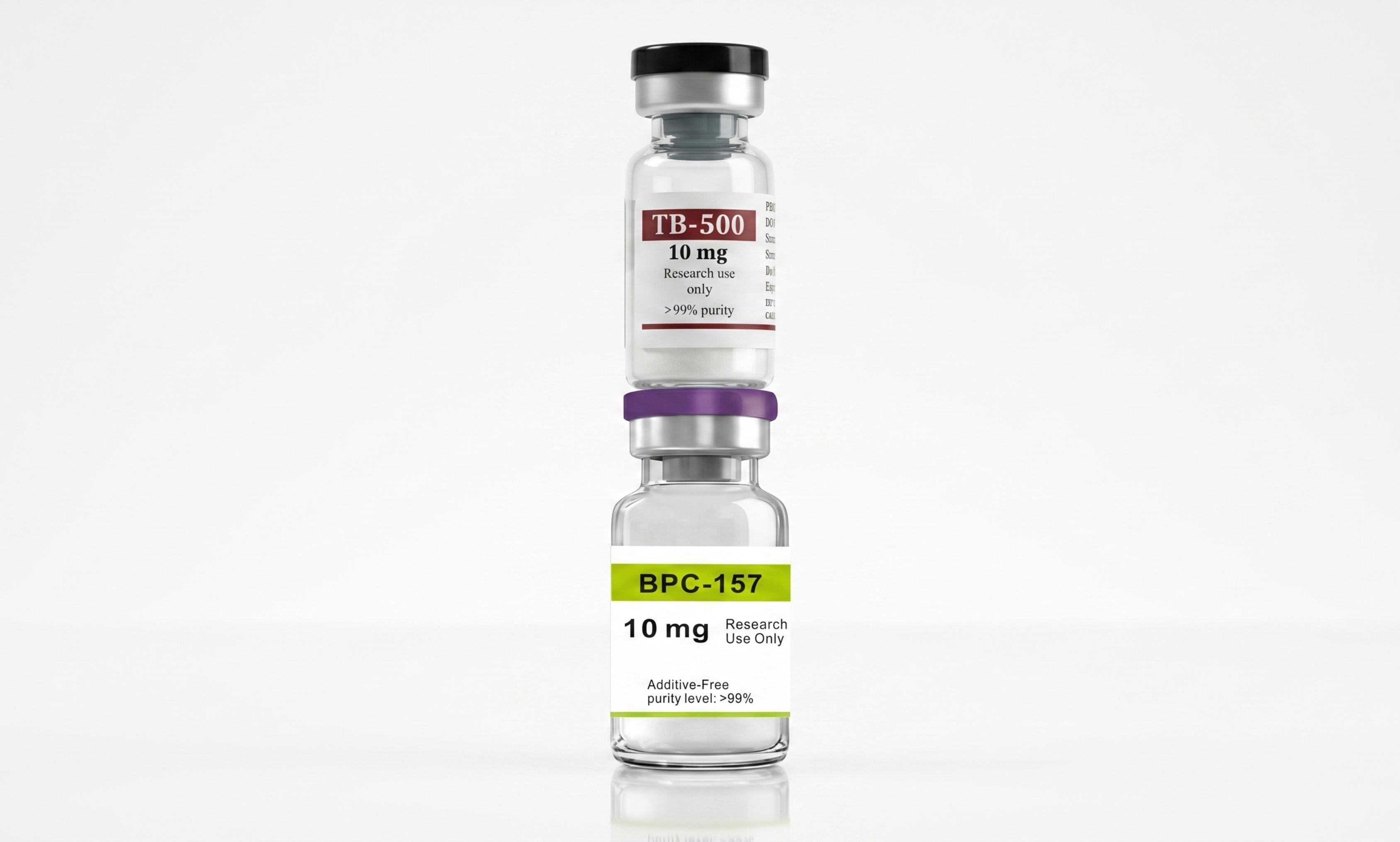
This is the most clinically discussed, most widely used, and most mechanistically justified TB-500 stack available. The Wolverine Stack pairs TB-500 with the body protection compound BPC-157, and the combination works precisely because the two peptides complement rather than duplicate each other.
How the Two Peptides Interact
BPC-157 is a synthetic peptide derived from a naturally occurring protein found in gastric juice. It works locally, concentrating repair activity at specific injury sites through VEGF upregulation, nitric oxide pathway modulation, and fibroblast activation. Its strongest reported benefits are in local healing of tendons, ligaments, and gut health repair. It is typically administered near the injury site for maximum local effect.
TB-500 works systemically. After injection, it circulates throughout the body and drives cell migration and new blood vessel growth wherever damaged tissues exist. It does not need to be injected near the injury. The two peptides effectively cover both ends of the repair spectrum: BPC-157 builds the local healing environment at the injury site, while TB-500 mobilizes the cellular resources to get there.
At the molecular level, the combination creates what researchers describe as a multi-level approach to the healing cascade:
- Dual angiogenic stimulation: BPC-157 drives blood vessel formation via VEGF and nitric oxide signaling; TB-500 drives new blood vessel formation via direct endothelial cell migration and actin regulation. Different pathways, same outcome: improved circulation to damaged tissues
- Multi-level inflammation control: BPC-157 modulates NO-mediated inflammatory pathways; TB-500 shifts macrophage polarization toward a repair-oriented state. Together, they reduce inflammation more comprehensively than either alone
- Layered collagen support: BPC-157 directly activates fibroblasts to drive collagen synthesis and collagen production; TB-500 supports the structural scaffolding environment in which that collagen organizes through improved cell motility and actin dynamics
Dosing the Wolverine Stack
| Peptide | Typical Dose | Frequency | Administration |
|---|---|---|---|
| TB-500 | 2-5 mg | Twice weekly | SubQ, any site |
| BPC-157 | 250-500 mcg | Daily | SubQ, near injury site |
- Loading phase: Run both at full doses for 4-6 weeks.
- Maintenance phase: Reduce TB-500 to 2 mg weekly and BPC-157 to 250 mcg daily, or alternate days.
Best Use Cases for the Wolverine Stack
- Tendon injuries and ligament injuries: The combination’s dual angiogenic mechanisms directly address tendons’ notoriously poor blood supply, while BPC-157’s fibroblast activation targets the specific connective tissue repair pathways tendons need
- Muscle strains and soft tissue injuries: TB-500’s systemic healing and BPC-157’s local repair create comprehensive coverage for muscle recovery
- Post-surgical recovery: Accelerated wound healing and collagen production are both critical in surgical recovery, and the Wolverine stack addresses both
- Chronic joint pain with systemic inflammation: BPC-157’s gut health benefits also reduce systemic inflammatory load that contributes to delayed recovery in chronic pain patients
Is the Wolverine Stack Legal?
Both BPC-157 and TB-500 are banned by the World Anti-Doping Agency under the S0 non-approved substances category. Competitive athletes in any tested sport should not use either compound or this combination. For non-athletes, both exist in a regulatory gray area as research compounds, neither explicitly illegal to possess nor FDA-approved for human use.
At Natura Dermatology & Cosmetics, our TB-500 and BPC-157 protocols are built around each patient’s injury severity, health history, and timeline. We do not run generic Wolverine Stack protocols; we calibrate them.
Growth Hormone Stacks: CJC-1295 and Ipamorelin
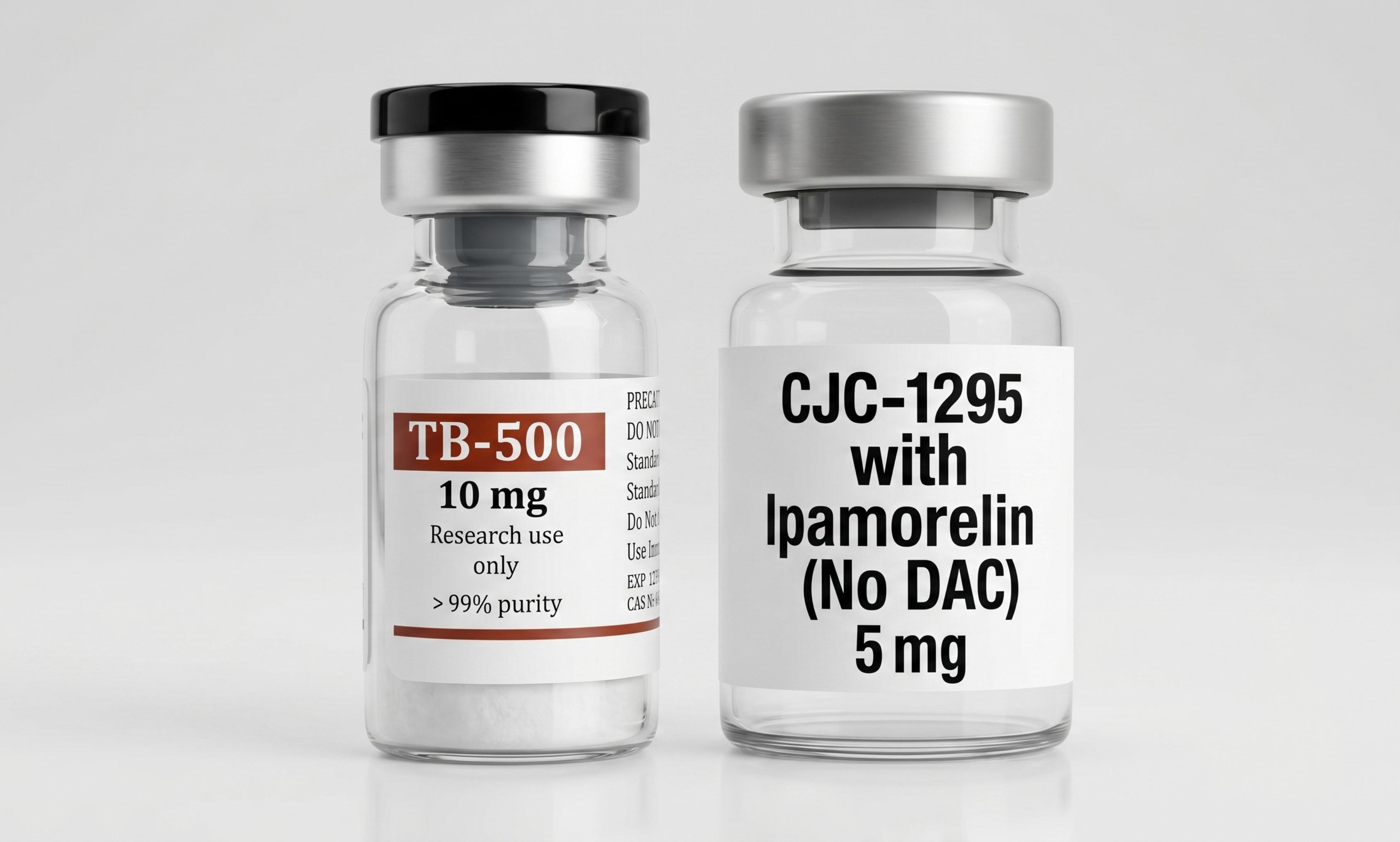
Adding growth hormone secretagogues to a TB-500 protocol is a logical next layer for patients whose recovery goals extend beyond acute tissue repair into broader physiological optimization: muscle recovery, body composition, sleep quality, and systemic recovery capacity.
How CJC-1295 and Ipamorelin Work
CJC-1295 is a synthetic version of growth hormone-releasing hormone (GHRH). It stimulates the pituitary gland to produce growth hormone through its natural pulsatile mechanism, extending the duration of each GH pulse. It also raises IGF-1 levels, which drive satellite cell proliferation and support both muscle growth and connective tissue repair.
Ipamorelin is a growth hormone secretagogue that stimulates GH release through a separate receptor pathway (the ghrelin receptor). It is considered one of the more selective GH-releasing peptides because it produces minimal spillover into cortisol or ACTH pathways, making it better tolerated than older secretagogues like GHRP-6.
Together, CJC-1295 and Ipamorelin push growth hormone release from two complementary angles: CJC-1295 extends GH pulse amplitude and duration while Ipamorelin adds a pulsatile release signal through a different receptor. The combination produces stronger GH output than either alone, without proportionally increasing side effects.
Where TB-500 Fits in This Stack
TB-500 operates independently of the GH axis entirely. Its mechanism is actin regulation and cell migration, not hormonal signaling. This means layering TB-500 onto a CJC-1295/Ipamorelin protocol does not create redundancy. Instead, it adds:
- Systemic tissue repair and wound healing at the cellular level, which GH secretagogues support indirectly via IGF-1, but do not drive directly
- Anti-inflammatory effects that reduce systemic inflammation, slowing recovery
- Blood vessel formation to improve nutrient delivery to tissues being rebuilt under elevated GH/IGF-1 conditions
The growth hormone environment created by CJC-1295 and Ipamorelin essentially amplifies the repair environment that TB-500 establishes. More GH means better anabolic conditions for tissue reconstruction. TB-500 ensures that the cellular infrastructure to take advantage of that environment is in place.
Dosing the GH + TB-500 Stack
| Peptide | Dose | Frequency | Timing |
|---|---|---|---|
| CJC-1295 | 100-300 mcg | Daily | Before bed, fasted |
| Ipamorelin | 100-300 mcg | Daily | Before bed, fasted (same injection as CJC-1295) |
| TB-500 | 2-5 mg | Twice weekly | Morning or evening, separate from GH peptides |
Keep TB-500 injections separate from the CJC-1295/Ipamorelin injection in both timing and site. This maintains dosing accuracy and avoids unnecessary site fatigue from stacking three compounds at one location.
Best Use Cases
This three-peptide stack is particularly suited for patients recovering from significant muscle injuries, post-surgical recovery requiring both tissue regeneration and muscle recovery, or individuals managing chronic joint pain who also want to address body composition alongside injury repair.
Advanced Combinations for Specific Goals
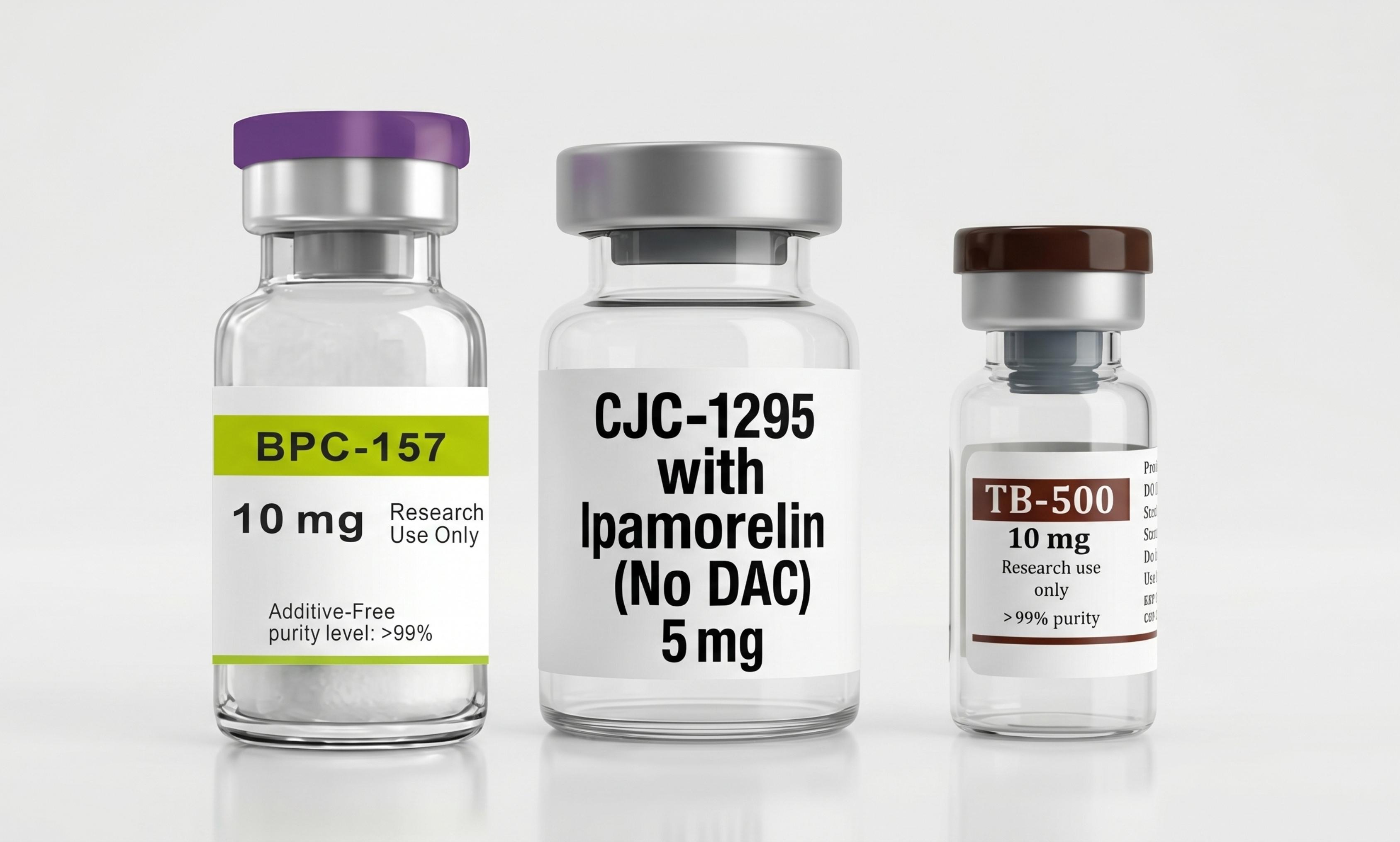
Beyond the Wolverine Stack and GH combinations, several more targeted pairings address specific recovery or regenerative goals that a standard TB-500 protocol alone would not fully cover.
TB-500 + GHK-Cu: Skin, Collagen, and Anti-Aging
GHK-Cu (copper peptide) is a naturally occurring protein fragment found in human blood plasma. Its primary mechanisms center on collagen production, extracellular matrix remodeling, and skin tissue repair. It is one of the few peptides with robust human clinical data supporting its effects, particularly in topical form for wound healing and skin regeneration.
Why pair it with TB-500? TB-500 drives systemic cell migration and new blood vessel formation. GHK-Cu provides the collagen synthesis and structural scaffolding framework for the new tissue to organize properly. Together, they address both the cellular movement phase and the structural rebuilding phase of tissue repair, which is particularly relevant for:
- Post-procedural recovery after laser treatments, microneedling, or surgical procedures
- Wound care and scar formation reduction
- Skin laxity following significant weight loss
Board-certified dermatologists have specifically noted using this combination perioperatively, starting peptide protocols several days before procedures to initiate cellular pathways before tissue stress begins.
TB-500 + BPC-157 + GHK-Cu: The KLOW Stack
Adding GHK-Cu to the Wolverine Stack creates what is often called the KLOW stack in clinical settings (BPC-157 + TB-500 + GHK-Cu + KPV). This combination extends coverage into:
- Collagen production and structural resilience of connective tissue
- Additional anti-inflammatory effects through GHK-Cu’s cytokine modulation
- Skin and wound healing support that neither TB-500 nor BPC-157 targets as directly
This is a more complex protocol suited for patients with both musculoskeletal and soft tissue concerns, or those in post-surgical recovery where skin integrity and deeper tissue repair are both priorities.
TB-500 + Ipamorelin: Simplified Recovery Stack
For patients who want more than TB-500 alone but are not ready for a full GH stack, TB-500 paired with Ipamorelin alone is a practical intermediate option. Ipamorelin’s selective GH release supports muscle recovery and sleep quality without the hormonal complexity of adding CJC-1295. This is a lower-commitment combination that most patients recovering from moderate soft tissue injuries tolerate well under medical guidance.
TB-500 + BPC-157 + CJC-1295/Ipamorelin: Full Recovery Protocol
For patients with serious ligament injuries, muscle strains requiring substantial muscle recovery, or post-surgical recovery following orthopedic procedures, combining the Wolverine Stack with GH secretagogues creates the most comprehensive recovery environment available through peptide protocols:
- TB-500: systemic healing, cell motility, inflammation control, new blood vessel growth
- BPC-157: local healing, collagen synthesis, gut health, mucosal repair
- CJC-1295/Ipamorelin: systemic GH/IGF-1 support, deep sleep optimization, muscle recovery
This is a four-compound protocol that requires full medical supervision, baseline labs before starting, and structured monitoring throughout. It is not appropriate as a self-directed protocol.
What to Avoid When Stacking TB-500
The most important stacking principle is also the one most often ignored online: if two peptides push the same pathway, you are compounding side effects more than benefits. Here is a practical guide to what to avoid and why.
Avoid Stacking Two GH Secretagogues Without Guidance
CJC-1295, Ipamorelin, GHRP-6, MK-677, and Tesamorelin all operate on growth hormone signaling pathways. Stacking two or more of these compounds simultaneously creates redundant GH stimulation that does not produce proportionally better results but does increase the risk of:
- Water retention and joint discomfort from chronically elevated GH
- Glucose tolerance shifts from sustained IGF-1 elevation
- Sleep architecture disruption if timing is not carefully managed
The standard clinical approach is one GHRH analog (CJC-1295) plus one GHRP (Ipamorelin). Adding a third GH-pathway compound without a specific clinical rationale is not justified by available evidence.
Avoid Stacking With Active Cancer or Unscreened Cancer Risk
Both TB-500 and BPC-157 promote angiogenesis and cell migration. These are the mechanisms that make them effective for tissue repair and support recovery. They are also the mechanisms that make both compounds contraindicated for anyone with active cancer or unscreened malignancy risk. Adding GHK-Cu, which also promotes cellular proliferation, does not reduce this concern.
Before starting any multi-peptide stack, cancer screening appropriate to age and health history is a baseline requirement, not a suggestion. Our providers at Natura Dermatology & Cosmetics run this evaluation before recommending any combination.
Avoid Blended Pre-Mixed Vials Without Verification
Pre-blended BPC-157 + TB-500 vials are widely sold in the research chemical market. While convenient, they create a dosing problem: standard protocols call for different amounts of each peptide. A 1:1 blend forces you to either underdose TB-500 or overdose BPC-157 to hit your targets. Separate vials with independent dosing give you accurate control over each compound.
Avoid Running Stacks Continuously Without Off Periods
Any multi-peptide protocol needs structured cycling. Running TB-500 and BPC-157 continuously without off periods risks receptor desensitization and removes any signal about what is actually driving your recovery. Most clinical protocols follow a pattern of 4-8 weeks on, 4-8 weeks off, with clinical reassessment before restarting.
Avoid Stacking Without Tracking
If you cannot attribute an outcome to a specific compound, you cannot practice responsibly, and your provider cannot optimize your protocol. Adding multiple peptides at once with no baseline measurements and no structured tracking makes it impossible to know what is working, what is causing side effects, and what to adjust. At minimum, document:
- Injury site pain scores before and throughout the protocol
- Range of motion and joint mobility at baseline and at protocol midpoint
- Any injection site reactions, and which site they occurred at
- Sleep quality, energy, and any systemic symptoms
The stack you can attribute and adjust is always more valuable than the stack with the most compounds. Less is often more when the goal is efficient repair, not complexity for its own sake.
At our clinic, every peptide therapy protocol, stacked or single-compound, starts with a full evaluation and ends with a structured follow-up. Dr. Will Richardson and our clinical team build protocols around your specific injury, health history, and recovery goals. If a stack is the right call, we design it properly. If it is not, we tell you that too.
Stack Smarter, Not Harder: Natura Dermatology & Cosmetics Has You Covered
Peptide stacking works when it is built on mechanistic logic, not wishful thinking. The right combination targets distinct biological pathways, covers both local and systemic healing, and is monitored closely enough that you can actually attribute what is working.
Key takeaways:
- Stacking adds value when peptides target different rate-limiting steps in the healing cascade, not the same pathway twice
- The Wolverine Stack (TB-500 + BPC-157) is the most mechanistically justified combination: systemic repair meets local healing
- Adding CJC-1295 and Ipamorelin creates a full recovery environment covering tissue repair, muscle recovery, and sleep optimization
- GHK-Cu extends the stack into collagen production and structural resilience for post-procedural or wound healing goals
- Pre-mixed BPC-157 + TB-500 blended vials create dosing problems; separate vials give you accurate control
- Stacking two GH secretagogues without guidance amplifies side effects more than results
- Anyone with active cancer or unscreened cancer risk should not stack angiogenic peptides
- Every multi-peptide protocol requires structured cycling, baseline tracking, and clinical reassessment before restarting
- The most effective stack is the one you can attribute, adjust, and monitor, not the one with the most compounds
At Natura Dermatology & Cosmetics, we design every peptide therapy protocol around your specific recovery goals, injury profile, and health history. Whether you need a simple TB-500 protocol or a fully structured multi-compound stack, our providers build it properly. Book a consultation to get started.
Frequently Asked Questions
What to Stack With TB-500?
BPC-157 and TB-500 is the most validated pairing in peptide therapy. Adding CJC-1295 and Ipamorelin supports natural healing processes across multiple tissue types for comprehensive injury recovery.
What Peptides Should Not Be Stacked Together?
Avoid stacking two growth hormone secretagogues simultaneously. Redundant pathways amplify side effects over benefits. Preclinical research confirms amino acids and key components work best through complementary, not overlapping, mechanisms.
What Is the Stack of TB-500 and BPC-157?
Known as the Wolverine Stack, BPC-157 and TB-500 combine body repair peptides that accelerate healing systemically and locally. Preclinical research and regenerative medicine practice confirm that it supports ligament healing and improved mobility.
How Often Should I Inject BPC-157 and TB-500 Blend?
BPC-157 and TB-500 peptide therapy is typically administered with TB-500 twice weekly and BPC-157 daily. This schedule supports healing, accelerates recovery, and sustains the body’s natural healing processes throughout your injury recovery protocol.


