

Your skin looks dry and patchy, but it barely bothers you. Could that still be eczema? Or does eczema always itch by definition? The honest answer surprises most people: usually yes, but not always. And that distinction matters more than you think.
Inside this guide:
- Whether eczema can exist without itch
- Why eczema itches in the first place
- The itch-scratch cycle explained
- Triggers that make itching worse
- Proven ways to calm your skin
At Natura Dermatology in Fort Lauderdale, we treat eczema at the source, not just the surface. Real relief starts with the right diagnosis.
Does Eczema Always Itch? The Short Answer
Eczema itches for the overwhelming majority of people, and that itch is often the defining symptom. But it is not a universal law.
Dermatologists have a nickname that captures the pattern perfectly. Atopic dermatitis is often called the “itch that rashes,” because it tends to start suddenly with very itchy skin, and scratching that skin often causes the rash. The itch usually comes first, then the visible damage follows.
The medical consensus is clear on how central this symptom is. Itching is the most common symptom of atopic dermatitis, and it can be severe. Some people scratch until their skin bleeds.
So where’s the nuance? Eczema cycles. You may experience eczema that does not itch all the time, because the condition goes through periods where it is hardly noticeable and others where symptoms are intense. Mild patches and healing skin can feel calm while still looking dry and scaly.
Pro tip: Never rule out eczema just because it does not itch today. Diagnosis rests on the full picture: appearance, location, history, and pattern over time.
When Eczema Does Not Itch
If your patches sit quietly, you are not imagining things. Several situations produce eczema symptoms with little or no itch, and knowing them helps you interpret your own skin.
Mild and healing stages
Eczema fluctuates by design. During a calm stretch between eczema flares, affected skin may look dry, scaly, or discolored without triggering much sensation. Healing skin often behaves the same way, staying rough and flaky as the barrier rebuilds while the itch fades first.
Certain types of eczema
Not every form of the disease itches equally. Weeping and scaling describe how a rash looks; they are not distinct eczema types that can be assumed not to itch. Seborrheic dermatitis is another example that often reads more as flaking than itching, which our seborrheic dermatitis guide breaks down in detail.
What eczema looks like without the itch
When itch takes a back seat, watch for these visual clues instead:
- Very dry skin that stays rough despite moisturizer
- Scaly skin or fine flaking in patches
- Thickened, hardened skin from past scratching
- Color changes ranging from red to darker brown, purple, or lighter patches
That last point matters a lot. Eczema rashes vary in color based on skin tone. On darker skin tones, inflammation often shows as darkening or lightening rather than the classic red, which can delay diagnosis.
Why Eczema Itches So Intensely
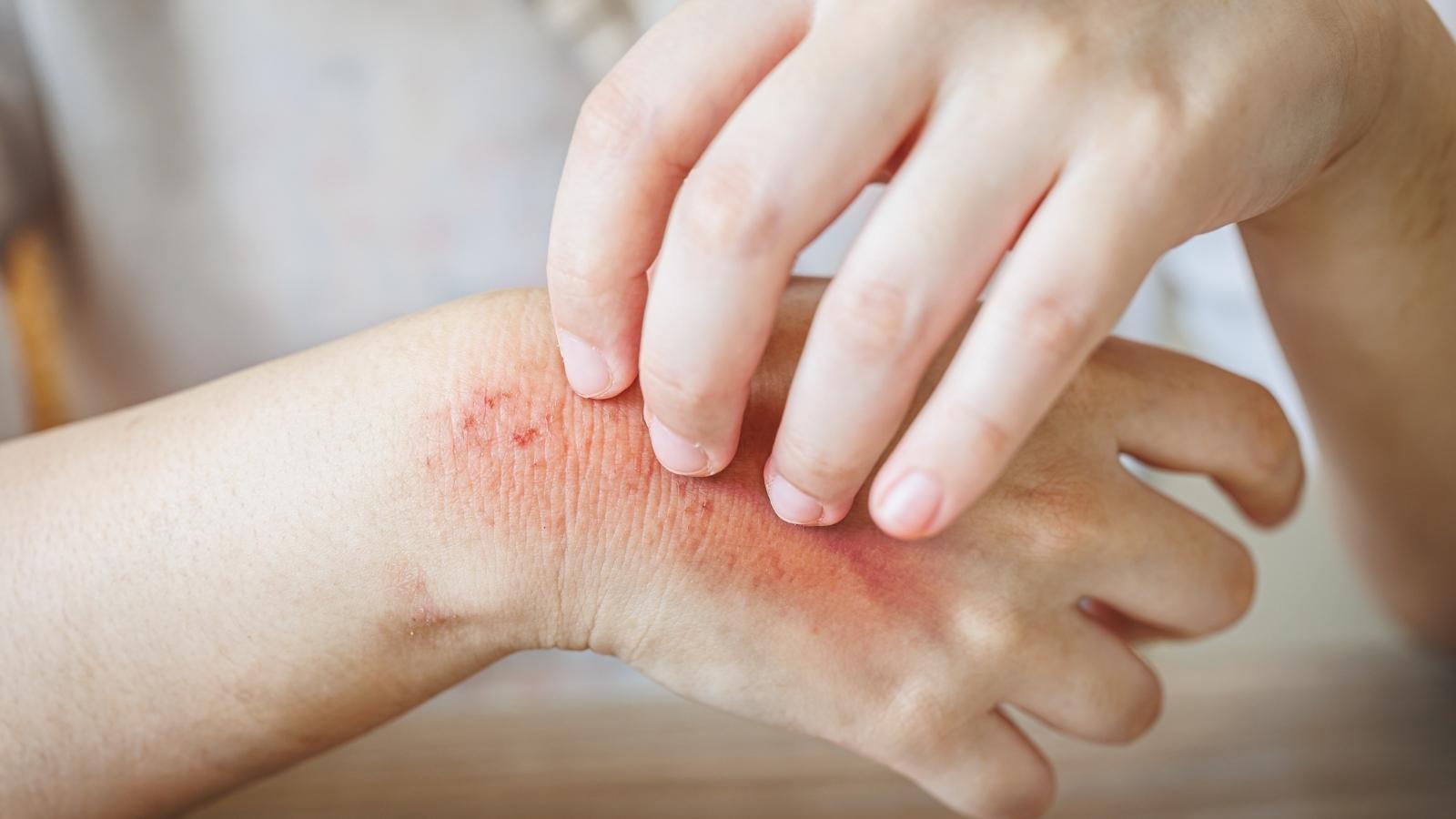
The itch is not a nuisance layered on top of a rash. It’s the engine of the disease. Understanding the mechanism explains why moisturizer is medicine, not just comfort.
A broken skin barrier
Your skin’s barrier function is your first defense. In eczema, that wall leaks. Changes in the protective layer of skin make it lose moisture faster than usual, which leaves skin dry and vulnerable to damage.
Genetics often set this up. Eczema is linked to genetic variations affecting skin barrier proteins like filaggrin, which is why family history predicts risk so strongly.
An overactive immune system
Behind the dryness sits immune trouble. In atopic dermatitis, problems with the skin barrier combine with immune activity and nerve signaling to contribute to inflammation and itch. Histamine is only one part of that process, which is why antihistamines do not directly treat eczema itch.
This is why severe cases feel so relentless. People with severe atopic dermatitis may experience intense itching or burning, sometimes describing a sensation like being poked with needles, and the most severe cases feel it daily.
The Itch-Scratch Cycle Explained
Scratching brings relief for seconds. Then it costs you days. This loop is the single biggest reason mild eczema turns severe.
Here’s how the trap closes:
- Itch begins from dryness or inflammation
- You scratch, which damages the skin barrier further
- Inflammation rises in response to the injury
- The itch intensifies, and the cycle restarts
Scratching does more than repeat the sensation. Scratching leads to redness, swelling, cracking, weeping clear fluid, crusting, and scaling. Broken skin also opens the door to skin infections.
That infection risk deserves attention. Atopic dermatitis raises the odds of Staphylococcus aureus infections on the skin, since the damaged barrier gives bacteria an easy entry point. Yellow crusting or sudden worsening warrants a call to your provider.
Breaking the cycle is the whole game. Short nails, cotton gloves at night, cold compresses instead of fingernails, and moisturizer applied before the itch starts all interrupt the loop at different points.
Recognizing Eczema Triggers
Dryness, irritating soaps, fragrance, heat and sweat can worsen symptoms. Because eczema triggers differ from person to person, track what seems to precede your own flares instead of assuming every common trigger affects you.
Food allergy can coexist with eczema, especially in some children, but food avoidance is not a routine eczema treatment. Do not remove major food groups or order broad allergy panels without clinical guidance. A clinician can assess a reproducible reaction and decide whether testing is useful.
People with atopic dermatitis are more likely to develop other allergic conditions, such as asthma or allergic rhinitis. This tendency is often described as the atopic march, although it does not occur in the same way for every child.
Relieving Eczema Itch
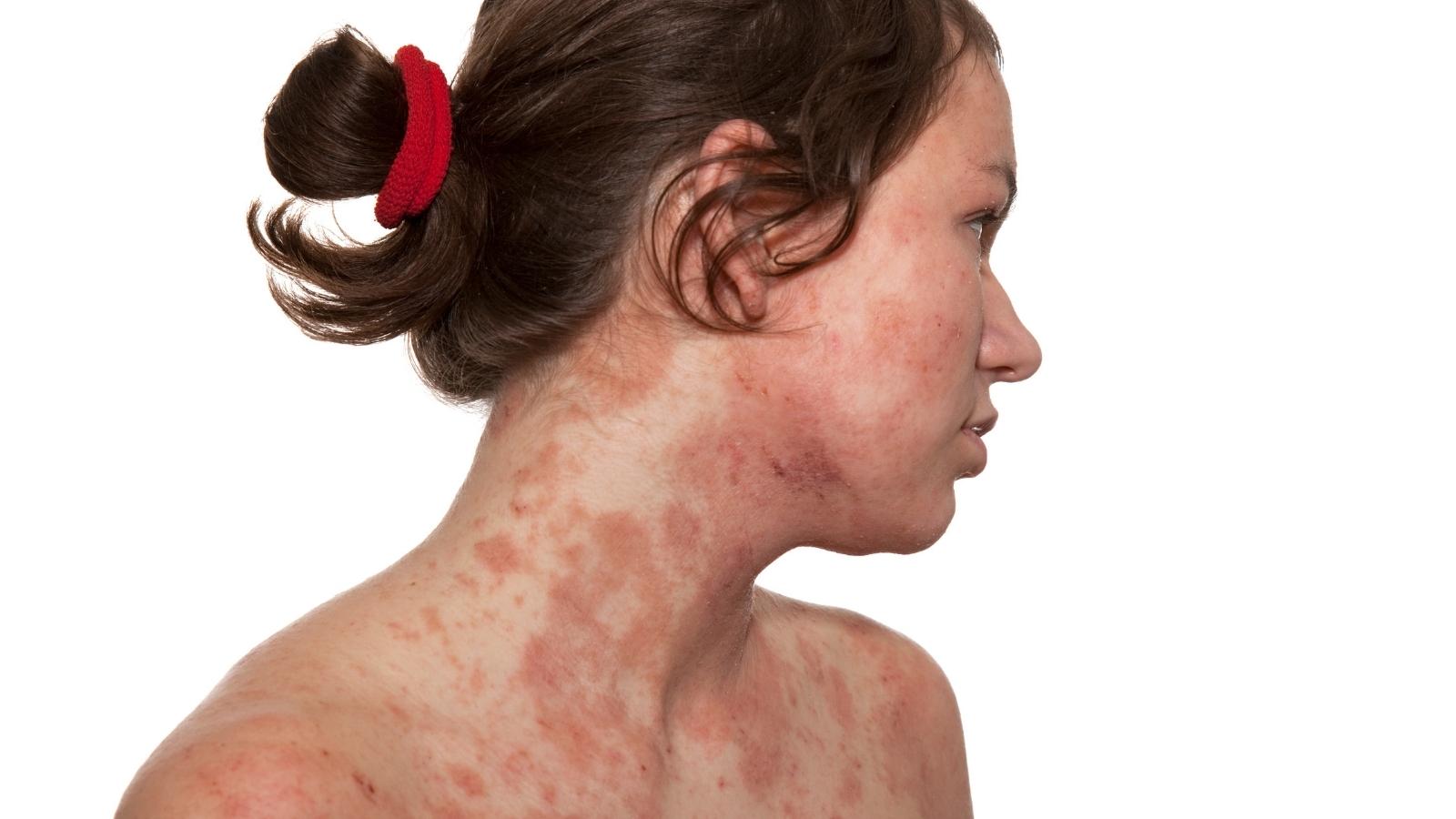
Use a fragrance-free moisturizer regularly and after short, lukewarm bathing. A cool compress may help soothe itching. If this is not enough, a dermatologist can select treatment for your age, affected areas and disease severity.
Options may include topical corticosteroids, nonsteroid prescription creams, medically supervised ultraviolet phototherapy, or systemic treatments for appropriate patients. UV phototherapy is not interchangeable with cosmetic LED treatment.
Antihistamines do not address the underlying inflammation of eczema and generally are not dependable for controlling the itch. A clinician may sometimes recommend a sedating antihistamine briefly when sleep is severely disrupted; this is different from treating the eczema itself. For children, antihistamine use should be discussed with a healthcare professional before starting treatment.
When to See a Dermatologist
Over-the-counter care has limits, and some signs mean it’s time for professional help. Getting an accurate eczema diagnosis matters, since other inflammatory skin conditions can look nearly identical.
Book an appointment if you notice any of these:
- Itching that disrupts your sleep or daily activities
- Skin that cracks, oozes, or shows yellow crusting
- Little improvement after weeks of consistent moisturizing
- A rash spreading across large areas of the body
- Signs of infection like warmth, swelling, or fever
Diagnosis is largely clinical. A dermatologist examines your skin, asks about family history and triggers, and rules out lookalikes like contact dermatitis, seborrheic dermatitis, or psoriasis. Wondering how eczema and psoriasis differ? Our guide on how long eczema lasts covers the timeline, and the psoriasis itch guide helps you compare.
The mental health angle deserves mention too. Chronic itching disrupts sleep and daily function, and the toll on mood is real. You do not have to tough it out alone, and knowing when to see a dermatologist is a strength, not an overreaction.
Find Real Eczema Relief at Natura
So does eczema always itch? Almost always, but calm and healing stages can stay quiet while your skin still needs care. Either way, the right plan brings your skin back to comfort.
Keep these takeaways handy:
- Itch is the most common eczema symptom, but not universal
- Mild or improving eczema may itch less, but scaling alone does not identify a non-itchy subtype
- A broken skin barrier plus immune overactivity drives the itch
- Scratching worsens eczema and raises infection risk
- Moisturizing twice daily plus targeted treatment brings relief
Tired of guessing what your skin needs? Book a consultation at Natura Dermatology in Fort Lauderdale, where our board-certified team confirms your diagnosis and builds a plan around your triggers and skin. Explore our eczema treatment options and get ahead of the next flare.
Frequently Asked Questions
What is the main cause of eczema?
Eczema comes from a combination of genetics and immune overactivity. Skin barrier defects, often linked to family history, let moisture escape and irritants in.
What is the biggest trigger for eczema?
Dry skin and irritants like soaps and detergents top the list, alongside stress, dust mites, and weather changes. Personal triggers vary, so tracking flares helps.
What is the 3-minute rule for eczema?
The 3-minute rule means applying moisturizer within three minutes of bathing while skin is still damp. This soak-and-seal method locks in water and reduces itching.
What can be mistaken for eczema?
Psoriasis, seborrheic dermatitis, contact dermatitis, fungal infections, and scabies can all resemble eczema. A dermatologist distinguishes them by pattern, location, and history.
How do I stop my eczema from itching?
Regular moisturizing and a cool compress can help. Use prescribed flare treatment as directed. Antihistamines do not treat eczema itch itself; a clinician may occasionally use a sedating medicine briefly for disrupted sleep. Persistent symptoms need a tailored treatment plan.


