

You scratch, it flares. You flare, you scratch. If that loop sounds familiar, you already suspect the answer. So does psoriasis itch? Yes, and for most people, intensely. The old myth that psoriasis is painless but not itchy simply does not hold up.
Inside this guide:
- Why psoriasis triggers the itch
- How itch differs by type
- The itch-scratch cycle explained
- Triggers that make it worse
- Proven ways to find relief
At Natura Dermatology in Fort Lauderdale, we help you calm the itch and treat its root cause. Relief starts with the right plan.
Does Psoriasis Itch? The Short Answer
Yes, psoriasis itches, and it does so for the large majority of people who have it. For years, doctors downplayed the itch, but the research tells a different story.
The numbers are striking. An estimated 60 to 90 percent of patients with psoriasis suffer from pruritus, the medical term for itch, which impairs their quality of life. Many studies land near the 80 percent mark. So if your scaly patches drive you to scratch, you are far from alone.
A bit of context on the condition itself. Psoriasis is a chronic autoimmune disease in which the immune system speeds up the life cycle of skin cells. It is one of the most common chronic inflammatory skin diseases, affecting 2 to 3 percent of the world’s population.
That rapid buildup creates the raised, scaly plaques psoriasis is known for. And those psoriasis plaques are exactly where the itch lives.
Pro tip: If a clinician ever tells you psoriasis “shouldn’t itch,” seek a second opinion. Itch is a real, well-documented symptom that deserves a treatment plan.
Why Psoriasis Makes You Itch
The itch is not in your head. It starts deep in your skin, where your immune system and your nerves cross wires. Understanding the mechanism helps you treat it smarter.
The role of inflammation and cytokines
In psoriasis, overactive immune cells flood the skin with signaling proteins called cytokines. These molecules drive inflammation, and they also irritate the tiny nerve endings in your inflamed skin. That irritation registers in your brain as an itch.
Meet IL-31, the itch cytokine
One cytokine stands out in the itch story. Recent evidence suggests the pruritogenic cytokine interleukin-31, or IL-31, is a major driver of itch in autoimmune skin diseases. Studies show this protein runs higher in psoriasis lesions than in healthy skin.
Here’s a hopeful detail that connects cause to cure. Researchers found IL-31 serum levels dropped significantly after narrowband UVB phototherapy, alongside a substantial reduction in itch. In other words, calming the inflammation calms the itch.
Dry skin pours fuel on the fire
Inflammation sets the stage, but dry skin makes it worse. The thick scales and flaky skin of psoriasis disrupt your skin barrier, letting moisture escape. Dry, cracked skin itches more and can even bleed. This is why hydration sits at the center of itch relief, a point we return to below.
Itch By Type of Psoriasis
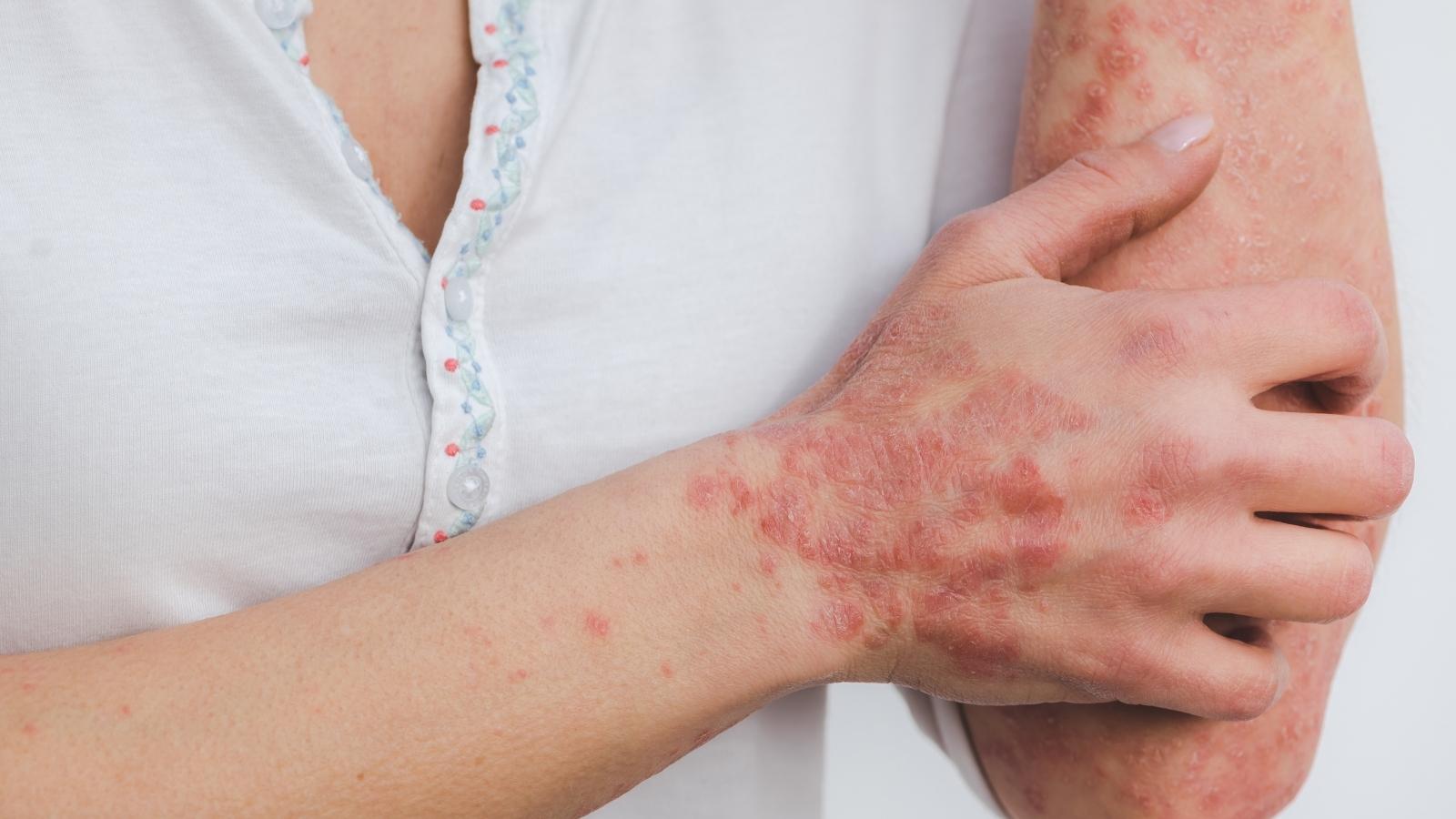
Psoriasis is not one single disease. It shows up in several forms, and the itch can vary with each. Here’s how the most common types compare.
| Type | What it looks like | Itch level |
|---|---|---|
| Plaque psoriasis | Raised, scaly plaques with silvery-white scales | Common, often intense |
| Guttate psoriasis | Small, drop-shaped spots | Mild to moderate |
| Inverse psoriasis | Smooth, red patches in skin folds | Itchy and often sore |
| Pustular psoriasis | White pustules on inflamed skin | Burning and itchy |
| Nail psoriasis | Pitting and lifting at the nail bed | Less itch, more discomfort |
| Erythrodermic psoriasis | Widespread redness over the entire body | Severe, a medical emergency |
Plaque psoriasis is the most common form, making up roughly 80 percent of cases. Its thick, scaly patches are prime itch territory. Scalp psoriasis deserves a special mention, since the itch there can feel relentless and may affect the hairline, as our guide on psoriasis and hair loss explains.
A note on skin tone
Psoriasis can look different on brown or black skin. Instead of the classic pink or red, plaques may appear purple, gray, or darker brown, often with thicker scales. This can lead to missed or delayed diagnoses, so it helps to know what to look for in your own skin tone.
The Itch-Scratch Cycle Explained
Scratching feels good for about three seconds. Then it backfires. This trap has a name, and breaking it is central to managing psoriasis.
The itch-scratch cycle works like this. Itch makes you scratch. Scratching damages the skin and triggers more inflammation. That fresh inflammation produces more itch, and around you go again.
There’s a greater danger here than discomfort. Scratching injured skin can spark new psoriasis plaques, a phenomenon where trauma fuels fresh lesions. It also raises your risk of infection when you break the skin barrier.
To break the cycle, focus on these habits:
- Keep nails short so scratching does less damage
- Wear cotton gloves at night to protect your skin while you sleep
- Apply a cold compress instead of scratching when the itch spikes
- Moisturize on schedule rather than waiting for the itch
Each of these interrupts the loop at a different point. Stack them together, and you give your skin a real chance to settle.
What Triggers Psoriasis Itch
Psoriasis flares come and go, and certain triggers reliably crank up both the rash and the itch. Knowing your personal triggers is half the battle.
Stress and emotional strain
Stress is one of the most powerful flare triggers there is. Studies suggest stress sparks flare-ups in nearly 90 percent of psoriasis patients. The link runs both ways, since the itch itself adds stress, feeding another loop worth breaking.
Weather and environment
Cold, dry air is a classic aggravator. Research indicates cold weather worsens psoriasis in about 40 percent of patients, largely by drying out the skin. Other environmental factors like low humidity and harsh soaps can pile on.
Infections, injury, and medications
Several physical triggers round out the list:
- Infections such as strep throat can set off guttate psoriasis
- Skin injury, including cuts, sunburn, and even scratching, can spark new plaques
- Certain medications are known to trigger or worsen flares
If you suspect a drug is fueling your flares, talk to your doctor before stopping anything. Psoriasis also travels with other conditions like psoriatic arthritis and inflammatory bowel disease, which is why a full medical picture matters.
It helps to know your itch is different from eczema, also called atopic dermatitis, which tends to itch more universally and often starts in childhood. Our piece on how long eczema lasts covers that distinction.
How to Relieve Psoriasis Itch
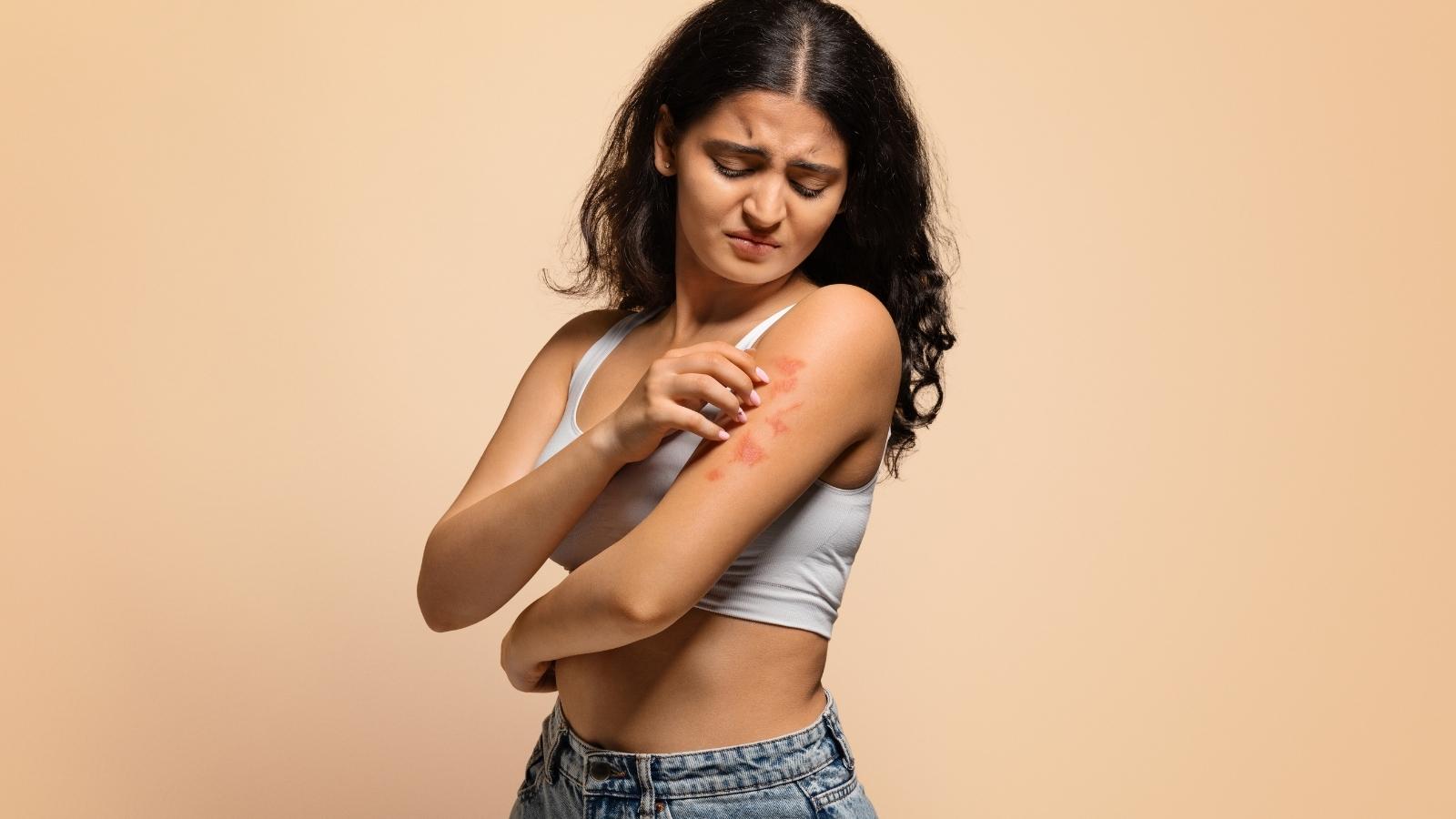
Here’s the part you came for. You can quiet the itch, and a good plan combines simple home steps with proven medical therapy. Start gentle, then escalate as needed.
Home remedies that genuinely help
These low-cost steps make a real difference for mild itch:
- Moisturize intensely. Thick creams hydrate and rebuild the skin barrier, which directly reduces itch.
- Use a cold compress. Cold dulls the itch signal without damaging skin.
- Take lukewarm baths. Add colloidal oatmeal, then moisturize right after.
- Skip hot showers. Heat strips oils and worsens dry skin.
Intense moisturization is the foundation. For stubborn dryness, our dry skin treatments go beyond what drugstore lotions can do.
Topical treatments
When home care is not enough, topical therapy steps in. Corticosteroids are the workhorses here, calming inflammation and relieving itch fast. Other options include coal tar, which has soothed psoriasis for generations, plus vitamin D analogs that slow skin cell buildup. Your provider matches the topical treatments to your skin and the affected areas.
Light therapy and advanced options
For widespread or severe psoriasis, stronger tools deliver. Phototherapy uses controlled ultraviolet light to reduce inflammation across larger areas, and as noted earlier, it can lower the very cytokines that drive itch. Our LED and light therapy options bring this in-office.
For moderate to severe disease, systemic medications and biologic treatments target the immune cells at the source. Here’s how the tiers compare:
| Approach | Best for |
|---|---|
| Topicals | Mild, localized plaques |
| Phototherapy | Widespread, moderate psoriasis |
| Systemics | Moderate to severe disease |
| Biologics | Severe or treatment-resistant cases |
When to See a Dermatologist
Home remedies have their limits. Some signs mean it’s time to bring in an expert, and sooner is better than later.
Reach out to a dermatologist if you notice any of the following:
- Itch that disrupts your sleep or daily life
- Plaques spreading across the entire body
- Skin that cracks, bleeds, or shows signs of infection
- Joint pain or stiffness, which can signal psoriatic arthritis
- Little improvement after weeks of over-the-counter care
A specialist can confirm your type of psoriasis, rule out other diseases, and build a treatment plan around your severity. Both the National Psoriasis Foundation and the American Academy of Dermatology stress that early, tailored care leads to better long-term control.
You do not have to white-knuckle the itch. If you are unsure when to see a dermatologist, that guide breaks down the warning signs in detail.
Find Lasting Itch Relief at Natura
So does psoriasis itch? Absolutely, and for the majority of patients it is one of the most disruptive symptoms. The good news: with the right care, you can calm the itch and quiet the flares.
Keep these takeaways close:
- Up to 90% of psoriasis patients experience itch
- Inflammation and the cytokine IL-31 drive the sensation
- Scratching worsens plaques and raises infection risk
- Stress, cold weather, and dry skin are top triggers
- Moisturizing, topicals, and phototherapy bring real relief
Tired of fighting the itch on your own? Book a consultation at Natura Dermatology in Fort Lauderdale, where our board-certified team treats psoriasis at its root, not just the surface. Explore our full range of psoriasis treatments and finally get ahead of the flare.
Frequently Asked Questions
Does psoriasis itch all the time?
Not always, but most patients itch during flares. About 60 to 90 percent of people with psoriasis experience itching, which often worsens with dry skin and stress.
Is psoriasis itchier than eczema?
Usually no. Eczema tends to itch more intensely and universally, while psoriasis causes mild to severe itch in most, but not all, patients.
Why does my psoriasis itch worse at night?
Skin loses moisture and body temperature shifts at night, intensifying itch. Fewer daytime distractions also make the itch feel stronger once you lie down.
Does scratching make psoriasis worse?
Yes. Scratching damages skin, fuels the itch-scratch cycle, can trigger new plaques, and raises your risk of infection. Use a cold compress instead.
What stops psoriasis itch fast?
A cold compress, intense moisturizer, and a topical corticosteroid offer the fastest relief. For lasting control, phototherapy or systemic treatment targets the underlying inflammation.
Can psoriasis itch without visible plaques?
Yes. Itch can precede a visible flare or linger on healing skin, since the nerve irritation from inflammation does not always match the rash exactly.


