

That mole on your face has bothered you for years, but every “natural remedy” you’ve Googled sounds either dangerous or ineffective.
Most adults have between 10 and 40 moles, and while the majority are harmless, many people want them removed for cosmetic reasons or peace of mind. The problem? Misinformation about mole removal is everywhere, from DIY removal kits that cause scarring to dangerous advice about cutting them off at home. We’re breaking down the only safe, effective methods dermatologists actually recommend.
Here’s what we’ll cover:
- The difference between moles that need removal versus cosmetic removal
- Safe medical removal techniques (surgical excision, shave removal, laser)
- Why at-home mole removal is dangerous and what can go wrong
- How to tell if a mole needs immediate medical attention
- What to expect during and after professional mole removal
At Natura Dermatology & Cosmetics in Fort Lauderdale, Dr. Will Richardson performs mole evaluations and removals daily using advanced techniques that minimize scarring. Our Mohs surgery expertise means we can handle everything from cosmetic removal to skin cancer treatment.
The Difference Between Moles That Need Removal Versus Cosmetic Removal
Not all mole removal procedures are the same. Understanding when a mole needs medical attention versus when it’s purely a cosmetic concern helps you make the right choice.
Medical Mole Removal: When It’s Necessary
Generally, moles are removed if your provider suspects they might be cancerous or for cosmetic reasons. Medical removal happens when a dermatologist identifies suspicious changes that could indicate skin cancer.
When doctors recommend removal:
- The mole shows signs of melanoma or other skin cancers
- Atypical moles with irregular shapes or uneven color
- A new mole that appears different from your other nevi
- Changes in an existing mole (size, color, or shape)
- A mole that bleeds, itches, or becomes painful
- Location-related issues where the mole gets frequent irritation
Medically necessary removal is done due to health risks (cancer suspicion) or significant symptoms (pain, irritation, bleeding). The primary goal is health and diagnosis.
Most people have between 10 and 40 moles on their body. Moles are harmless in most cases, but your healthcare provider might recommend removing a mole if it looks suspicious.
Cosmetic Mole Removal: Personal Choice
Cosmetic mole removal is done purely for aesthetic reasons. You might be self-conscious about a mole on your face, neck, or another visible part of your body. Even if the mole poses no health risk, you might want it removed to achieve smoother skin.
Common reasons for cosmetic removal:
- Moles on the face or neck affecting appearance
- Raised moles that rub against clothing or jewelry
- Hair growing from the mole
- Moles in areas where they cause physical discomfort
- Personal preference to have smoother, more even skin tone
Cosmetic mole removal is considered an elective procedure, meaning it’s not medically necessary. Because of this, it’s usually not covered by insurance.
The Key Difference
The entire mole gets removed either way. The difference lies in why you’re removing it and what happens to the tissue afterward.
With medical removal, the mole gets sent to a lab for biopsy. A medical professional examines the skin cells under a microscope to check for cancerous or precancerous changes. With cosmetic removal, the goal is simply removing the mole with minimal scarring.
At Natura Dermatology & Cosmetics, Dr. Will Richardson evaluates every mole before recommending a removal method. We examine moles regularly during skin checks and can determine which removal options make sense for your situation. Our Fort Lauderdale clinic handles both medical and cosmetic mole removal with techniques that minimize scarring on your skin.
Safe Medical Removal Techniques (Surgical Excision, Shave Removal, Laser)

How do you get rid of skin moles safely? Only through professional medical procedures performed by a dermatologist or trained doctor.
Surgical Excision: Complete Removal
Surgical excision is a common and effective way to remove moles that extend deeper into the skin. It is often recommended for larger moles or those too deep to be removed by shaving.
The procedure:
- Your doctor cleans and numbs the area with a local anesthetic
- The doctor removes the entire mole along with a small margin of surrounding skin using a scalpel to ensure complete removal
- The wound may require stitches to close
- The entire mole gets sent for biopsy
This method works best for:
- Suspicious looking moles
- Cancerous moles that need complete removal
- Large or deep moles
- Atypical mole removal where cancer screening is needed
If a mole needs to be completely removed, particularly for medical reasons, excisional surgery is performed. The mole and a small margin of surrounding skin are cut out, and the wound is stitched closed.
Shave Excision: Surface Removal
For smaller, raised moles, a doctor can shave off the mole with a surgical blade. This method is often used for cosmetic mole removal as it usually leaves minimal scarring.
How it works:
- The doctor numbs the area
- A small blade or scalpel shaves the mole flush with the skin’s surface
- Usually doesn’t require stitches
- Minimal discomfort and quick healing
- Works well for benign moles and non-cancerous moles
Surgical shaving removes the visible portion but may not get the entire mole if it extends deep into the skin. That’s why shave excision works best for cosmetic reasons on raised, non-suspicious moles.
Laser Mole Removal: Precision Treatment
Laser mole removal is widely used for its safety, speed, and efficacy. Once the doctor confirms that the mole is not cancerous, he or she can remove the mole entirely using a laser.
Benefits of laser treatment:
- Laser mole removal is especially popular because its precision ensures that only the mole is removed, with surrounding skin cells remaining healthy and intact
- Works well on flat moles
- Minimal scarring compared to cutting
- Quick procedure with fast healing
Limitations:
- Can’t be used on suspicious or atypical moles (no tissue for biopsy)
- May require multiple treatments
- Best for small, superficial, benign moles
Cryotherapy: Freezing Method
Cryotherapy uses liquid nitrogen to freeze and remove small moles or other skin lesions. It is less commonly used for mole removal, but it may be an option for certain cases.
The freezing destroys the mole tissue, which then falls off. This method works for some skin tags and small, non-cancerous moles, but it isn’t ideal for larger moles or those needing a biopsy.
Which Method Is Right for You?
Your dermatologist will discuss removal options based on:
- Whether the mole is suspicious or benign
- Mole size, depth, and location on your body
- Your cosmetic concerns about scarring
- Whether biopsy is needed
At Natura Dermatology & Cosmetics, we offer all safe mole removal procedures. Dr. Will Richardson uses advanced surgical techniques to remove a mole with minimal scarring. We evaluate each mole’s characteristics and recommend the best removal method for your specific situation.
Why At-Home Mole Removal Is Dangerous and What Can Go Wrong
You might be tempted by mole removal creams or DIY cutting tools. Don’t do it. At-home mole removal carries serious risks that far outweigh any perceived convenience.
You Can’t Tell If It’s Cancerous
The main problem associated with removing something from your skin on your own is that there’s no way for you to tell if you’re removing a benign lesion or a malignant one.
“You may chop off a mole you don’t like, thinking you’re saving money by not going to the doctor, but you might actually be chopping off a melanoma,” says Dr. Sarnoff. If you cut off a primary melanoma yourself, melanoma cells can remain in the skin and spread through the bloodstream to other parts of the body — all without your knowledge.
Black skin moles and brown moles can hide melanoma. Most people can’t distinguish between harmless nevi and cancerous moles just by looking. A dermatologist uses specialized tools and training to identify suspicious changes.
Infection Risk
Dr. Sarnoff says people removing moles at home are unlikely to pay the same level of attention to the sanitation of tools, prepping the skin and postoperative care as a dermatologist would. An infection will delay healing at the site and increase the chances of scarring.
Infection symptoms include:
- Redness spreading from the wound
- Increased pain and swelling
- Bleeding that won’t stop
- Pus or discharge
- Fever
An infection in the wound can lead to permanent discoloration and raised scars that look worse than the original mole.
Severe Scarring
The risk of scarring after an at-home removal is already high compared to when you have a lesion removed by a dermatologist. At-home removals can result in chicken pox-like, indented scars or hypertrophic, bumpy ones.
Professional removal techniques minimize scarring by:
- Using precise surgical methods
- Closing wounds properly
- Following proper wound care protocols
- Choosing the right removal method for each mole’s location
Incomplete Removal
“Basically, the removal may not totally work, and you end up only cutting off the top of the mole,” Dr. Sarnoff explains.
When you choose to remove a mole at home using some kind of cutting instrument, you won’t remove all of the accumulated pigmented cells since you aren’t a professional dermatologist, which means the mole will probably redevelop and present an even darker shade than its previous color.
You’re left with a scar, and the mole grows back.
Home Remedies Don’t Work
Apple cider vinegar, garlic, iodine, and other home remedies sound natural, but cause problems.
Terms like “all-natural” are not another way to say “completely safe” or “effective.” Mole removal products are capable of leaving scars and burns regardless of their label. None of these ingredients are proven to remove moles.
Mole removal creams contain “natural” ingredients formulated to trick your immune system into believing that the skin is suffering damage, resulting in “overhealing” of the mole and skin surrounding it.
Misdiagnosis Risk
Dr. Sarnoff says “zapping” a mole with an at-home laser device can also cause changes to the cells that make them look problematic, even when they aren’t. The odd appearance of these cells could lead a pathologist to misdiagnose a benign mole as melanoma.
You could end up undergoing treatment for melanoma you never actually had.
What About Skin Tags?
Skin tags are different from moles, but you still shouldn’t remove them at home. Skin tags and seborrheic keratoses are benign, meaning they never turn into cancer. Since these growths are so small, it certainly feels like you could take them off quickly. Unfortunately, at-home mole removal may result in more immediate injuries.
The Bottom Line
Dermatologists are specially trained to perform skin surgeries like mole removal. They’ll do it safely, run diagnostic tests, and you’ll be happier with your appearance after healing than if you’d attempted to remove it yourself.
The small cost of professional removal prevents serious complications. At Natura Dermatology & Cosmetics, we safely remove moles using sterile techniques in a medical setting. Don’t risk infection, scarring, or missing skin cancer. Schedule a proper evaluation.
How to Tell If a Mole Needs Immediate Medical Attention
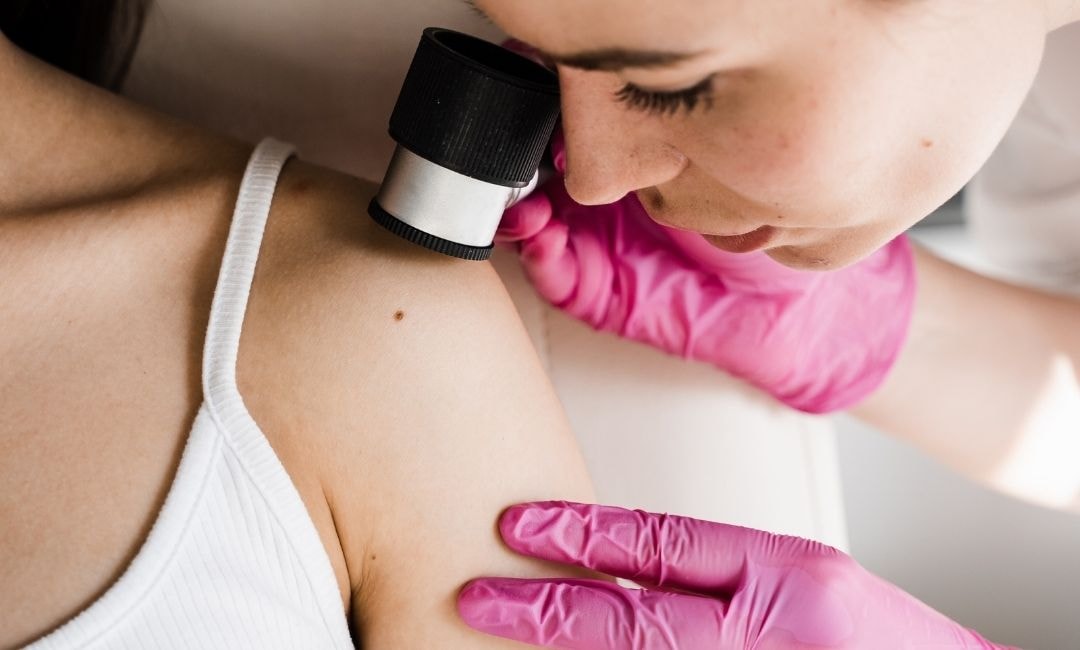
Most moles are harmless. But certain changes signal that you need to see a doctor immediately. Here’s how to spot the difference.
The ABCDE Rule for Melanoma
The ABCDEs of melanoma describe how to spot a cancerous mole. It stands for asymmetry, border, color, diameter and evolving.
- A is for Asymmetry: If you draw a line down the middle of a lesion and the two halves do not match, this could be a sign of melanoma. Normal moles are symmetrical. Melanoma often shows irregular shapes where one half doesn’t match the other.
- B is for Border: The borders tend to be uneven and could have scalloped or notched edges. Benign moles have smooth, well-defined edges. Suspicious moles have blurry, irregular, or ragged borders.
- C is for Color: The color of the mole is not a single shade. It may contain different shades of brown or black, or sometimes patches of red, gray, or dark blue.
Normal moles are typically one color (brown, tan, or skin tone). Multiple colors in the same mole indicate possible melanoma.
- D is for Diameter: If the lesion is the size of a pencil eraser or larger, it could be melanoma. A diameter greater than 6mm (about 1/4 inch) warrants examination. However, melanomas can be smaller.
- E is for Evolving: Any change in size, shape, color or height — or new symptoms like itching or scabbing — should be checked by a provider.
This is the most important sign. Changes mean something is happening with those skin cells.
Additional Warning Signs
Beyond the ABCDE rule, watch for:
- A mole that becomes itchy or painful
- Bleeding from a mole without injury
- A mole that develops a scab or crust
- A new mole that appears after age 30
- A mole that feels different from your other moles
- Redness or swelling around a mole
Most melanomas (an estimated 70%) start as a brand-new lesion, not in an existing mole, which is why it is especially important to pay attention to new moles.
The Ugly Duckling Sign
This recognition strategy is based on the concept that most normal moles on your body resemble one another, while melanomas stand out like ugly ducklings in comparison.
Look for a mole that looks dramatically different from all your other moles. It might be larger, darker, lighter, or just “off” compared to surrounding skin.
When to Schedule an Immediate Appointment
See a dermatologist right away if you notice:
- Any of the ABCDE warning signs
- A new mole that looks different
- An existing mole that’s changing rapidly
- A suspicious looking mole you’re worried about
- Any mole that bleeds, crusts, or won’t heal
According to the Skin Cancer Foundation, when melanoma is detected before it reaches the lymph nodes, the 5-year survival rate is 99 percent.
Early detection saves lives. Don’t wait.
Check Your Moles Regularly
Research shows that regular, yearly skin exams during doctor visits, along with regular skin self-examinations, can decrease the depth of melanomas at diagnosis.
How to self-examine:
- Check your entire body once a month
- Use mirrors to see your back and neck
- Note any new moles or changes to existing ones
- Take photos to track changes over time
- Pay special attention to sun-exposed areas
Don’t forget less obvious locations. Melanomas can appear anywhere on your body, including between your toes, under nails, and on your scalp.
Who’s at Higher Risk
Certain factors increase your risk:
- Fair skin that burns easily
- History of sunburns or excessive sun exposure
- Family history of melanoma or other skin cancers
- Many moles (more than 50)
- Atypical or dysplastic nevi
- Weakened immune system
If you’re high-risk, see your dermatologist for professional skin checks at least annually.
At Natura Dermatology & Cosmetics in Fort Lauderdale, Dr. Will Richardson performs thorough skin cancer screenings. We examine moles regularly and use dermoscopy to identify suspicious changes early. Don’t wait until symptoms worsen. Schedule your skin check today.
What to Expect During and After Professional Mole Removal
Understanding the mole removal procedure helps you prepare. Here’s exactly what happens from consultation to healing.
Before the Procedure
Before a mole removal procedure, your healthcare provider inspects your skin. They may take pictures of your moles to compare against at a later date. They may also use a tool called a dermoscope to get a closer look at the mole and determine how to best remove it.
Your doctor will:
- Evaluate whether the mole is benign or suspicious
- Discuss removal options appropriate for your mole
- Explain what method they’ll use
- Answer questions about scarring and healing
- Get your consent for the procedure
During the Removal
Your healthcare provider will mark the areas on your skin to be removed. Then, they’ll clean the area. You’ll receive numbing medicine (an anesthetic).
The actual removal:
- Local anesthetic numbs the area (you’ll feel a small amount of pressure or pinching)
- The doctor removes the mole using the chosen method (excision, shaving, laser)
- For surgical excision, stitches may close the wound
- The doctor applies a bandage
- The entire procedure takes 15-30 minutes for most moles
Whether you have a surgical excision or shaving to remove a mole, the procedure is quick and shouldn’t hurt once the area is numb.
Immediately After
After the procedure, you may have stinging or burning around the area for a few days. This is normal discomfort as the anesthetic wears off.
Most mole removal surgeries are quick, outpatient procedures. You should be able to drive yourself home from the appointment and return to work/school immediately.
Wound Care and Healing
To promote healing and prevent infection, you should follow your healthcare provider’s instructions about wound care. Following mole removal, you’ll have a wound that you should keep clean, moist and covered.
Proper wound care:
- Keep the area clean and dry for the first 24 hours
- Change the bandage daily or as directed
- Apply antibiotic ointment if recommended
- Watch for signs of infection (redness, swelling, pain, discharge)
- Avoid picking at scabs
- Protect the area from sun exposure
Healing time depends on your overall health and the size of the mole you had removed. It’ll likely take two to three weeks to heal from mole removal.
Scarring: What to Expect
Risks of mole removal procedures include scars (that may or may not be noticeable).
All removal methods leave some scar, but professional techniques minimize the appearance:
- Surgical excision: Linear scar where stitches were placed
- Shave excision: Flat, round scar usually less noticeable
- Laser removal: Minimal scarring, may have slight discoloration
The scar will be red initially, then fade to pink, and eventually blend with the surrounding skin over months. Scars on the face and neck typically heal better than those on the chest or back.
Biopsy Results
After a doctor removes a mole, they may send it to a lab. The lab will do a biopsy to check if the mole is cancerous.
Results typically come back within 1-2 weeks. If the results show no signs of cancer, you usually do not need more treatment. If your doctor finds something unusual, they will talk to you about the next steps.
When to Call Your Doctor
Contact your dermatologist if you experience:
- Signs of infection (increased pain, redness, swelling, pus)
- Bleeding that doesn’t stop with pressure
- The wound opens up
- Fever or chills
- Severe pain not controlled by over-the-counter medication
Most moles removed by dermatologists are permanently removed. But some moles come back (recur). If you have a mole removed and it comes back after healing, contact your healthcare provider.
Long-Term Care
After healing:
- Apply sunscreen to the scar when it’s exposed to prevent discoloration
- Massage the scar gently once healed to improve appearance
- Consider silicone scar sheets if recommended by your doctor
- Continue monitoring your skin for new or changing moles
Patients frequently ask: “Will the hair growing from my mole come back?” Hair growth depends on how deep the removal went. Excision typically removes the hair follicle. Shave removal may leave the follicle, allowing hair to regrow.
Cost and Insurance
Medicare will cover mole removal if the procedure is considered medically necessary and is documented as such in the medical record. Cosmetic removal is typically out-of-pocket.
At Natura Dermatology & Cosmetics, we help patients understand their insurance coverage and provide transparent pricing for cosmetic procedures. Dr. Will Richardson uses meticulous surgical techniques to minimize scarring and ensure optimal results. We’re with you through the entire process, from evaluation through complete healing.
Safe Mole Removal Starts at Natura Dermatology & Cosmetics
Removing a mole isn’t something to DIY. Professional removal protects your health, prevents complications, and delivers better cosmetic results. Whether you need a suspicious mole evaluated or simply want a cosmetic improvement, the right approach makes all the difference.
Key takeaways:
- Medical removal is necessary for suspicious or changing moles; cosmetic removal is elective
- Safe methods include surgical excision, shave removal, and laser (never at-home products)
- DIY removal risks infection, scarring, and missing melanoma
- The ABCDE rule helps identify moles needing immediate attention
- Professional removal takes 15-30 minutes with a 2-3 week healing time
At Natura Dermatology & Cosmetics, Dr. Will Richardson and our Fort Lauderdale team combine expertise in both medical dermatology and cosmetic procedures. From Mohs surgery for skin cancer to minimally invasive cosmetic removal, we handle every type of mole with precision. Schedule your evaluation to discuss which surgical procedures work best for your healthy skin.
Ready to discuss removal? Schedule a consultation at our Fort Lauderdale office to have your moles evaluated and learn which treatment options work best for your situation.
FAQs
How do you get rid of moles naturally?
You can’t safely remove moles naturally. Home remedies like apple cider vinegar, garlic, or iodine don’t work and can cause scarring, infection, and incomplete removal. There are no FDA-approved at-home mole removal products. Only medical professionals should remove moles using proven surgical procedures.
What causes moles on the skin?
Moles develop when melanocytes (pigment-producing skin cells) cluster together instead of spreading evenly. Most people develop moles due to genetics and sun exposure. Fair-skinned individuals tend to have more moles. Most moles appear by age 25, though new moles can develop throughout life.
Do skin moles ever go away?
Some moles may lighten or disappear over time naturally, but most remain permanent without removal. Moles don’t typically fall off on their own. If a mole suddenly disappears, changes dramatically, or falls off without treatment, see a dermatologist immediately, as this can indicate melanoma.
What does vaseline do to moles?
Vaseline does nothing to remove moles. It’s simply petroleum jelly that moisturizes skin but has no effect on mole tissue or pigmented skin cells. Claims about vaseline removing moles are myths. Only professional surgical procedures performed by a dermatologist can safely remove moles from healthy skin.


