

“Generally well-tolerated” appears in nearly every TB-500 article online. It is not wrong. But it is also not the whole story. The longest human clinical trial on thymosin beta-4 followed participants for just 180 days, which means anyone asking about long-term safety is asking a question the research has not fully answered yet.
That gap between promising preclinical data and real-world clinical certainty is exactly where most sourcing decisions get made. This article does not sugarcoat the unknowns or catastrophize the risks. It gives you the actual evidence, what it confirms, what it doesn’t, and what responsible use looks like given what we currently know.
Here’s what this guide covers:
- What the preclinical and human data actually shows about TB-500’s safety profile
- Common side effects: what to expect and what resolves on its own
- The cancer risk question: mechanism, evidence, and who should genuinely avoid it
- Long-term use considerations and where the research goes silent
- Who is and isn’t a good candidate for TB-500 therapy
At Natura Dermatology & Cosmetics, our providers screen every patient before recommending TB-500 therapy, including reviewing cancer risk factors, current medications, and health history. That evaluation is not optional. It is the foundation of responsible peptide therapy.
What the Safety Data Actually Shows
Let’s start with the honest framing: is TB-500 safe is not a question with a single clean answer. The more precise question is: safe compared to what, at what dose, for how long, and in whom? The evidence answers some of those questions clearly. Others remain genuinely open.
What Preclinical Studies Confirm
Animal models for TB-500 and its parent protein thymosin beta 4 are extensive and largely consistent. Across multiple preclinical models covering wound healing, tissue repair, cardiac recovery following myocardial infarction, and even traumatic brain injury, this synthetic peptide has shown a favorable safety profile with no significant organ toxicity at research doses.
One comprehensive toxicology assessment found no adverse effects in rodent models at doses up to 100 mg/kg, a level dramatically higher than anything used in human protocols.
Key preclinical safety findings:
- No mutagenic or genotoxic effects observed in standard testing
- No significant immune suppression at research doses
- No evidence of cancer promotion in animal studies at standard doses
- No hormonal disruption: TB-500 does not act on androgen, estrogen, or growth hormone pathways
- Mild, transient local reactions at injection sites are the most commonly reported finding
What Human Clinical Data Shows
This is where the evidence thins considerably. The majority of human data comes from clinical trials on full-length thymosin beta-4 (Tβ4), the 43-amino acid parent protein, not TB-500 directly. The two molecules share the same active region but are structurally distinct, meaning Tβ4 trial data cannot be directly extrapolated to TB-500 with certainty.
What human data exists:
- A Phase I trial of intravenous Tβ4 in 40 healthy adults found no dose-limiting toxicities or serious adverse events, even at doses up to 1,260 mg daily for 14 days
- Phase II trials for venous stasis and pressure ulcers showed accelerated wound healing in some patients and a well-tolerated safety profile
- A pilot study on patients following acute myocardial infarction found the compound was feasible and safe
- Adverse event profiles between placebo and treatment groups in available Phase I trials were largely similar
The longest any human clinical trial followed participants post-treatment was 180 days. Beyond that window, no published data exists on what happens with extended human use of this synthetic fragment.
The gap that matters most: Preclinical safety data is strong. Short-term human data is encouraging. Long-term human safety data is simply absent, not because researchers found problems, but because the trials have not been done at scale.
Common Side Effects: What to Expect

For most people using TB-500 at standard doses under medical supervision, the side effect experience is mild and short-lived. This section covers what is commonly reported, what resolves on its own, and what warrants attention.
Injection Site Reactions
The most commonly reported side effects are localized to the injection site itself: redness, mild swelling, minor bruising, and temporary warmth. These are not unique to TB-500. They are the expected response to any subcutaneous injection and typically resolve within a few hours. Consistently rotating injection sites across the abdomen, outer thighs, and upper arms prevents these reactions from compounding over a full protocol cycle.
What to watch for: Redness or swelling that persists beyond 24-48 hours, spreads beyond the immediate injection site, or is accompanied by warmth and pain at rest. These signs suggest possible infection and require clinical evaluation.
Fatigue and Mild Headaches
Some patients recovering through a TB-500 loading phase report transient fatigue in the first 1-2 weeks. The likely mechanism is the systemic healing demand: as TB-500 accelerates cell migration, inflammation modulation, and blood vessel formation across damaged tissues, the body’s energy allocation shifts. This typically resolves as the loading phase progresses.
Mild headaches, possibly related to the vasodilatory effects of angiogenesis, are another commonly reported early side effect. Staying hydrated and starting at the lower end of the dosing range reduces both.
Lightheadedness
A small number of users report brief lightheadedness immediately after injection, particularly if the injection is administered too quickly or on an empty stomach. Injecting while seated, depressing the plunger slowly, and avoiding intense activity for 30 minutes post-injection address this reliably.
What TB-500 Does NOT Cause
This is worth stating clearly because a lot of fear-based content conflates TB-500’s mechanism with side effects it has never been shown to produce:
- No testosterone or estrogen suppression: TB-500 is non-hormonal. Unlike anabolic compounds or growth hormone secretagogues, it does not alter endocrine pathways. This makes it one of the few recovery peptides appropriate for both men and women without hormonal monitoring requirements
- No muscle growth directly: TB-500 supports tissue repair and faster healing but does not directly stimulate muscle protein synthesis the way anabolic agents do
- No gut health disruption: Unlike some injectable compounds, no GI side effects are commonly reported with TB-500
- No mood or cognitive effects: Not a mechanism of this peptide
Side Effect Summary
| Side Effect | Frequency | Severity | Resolves |
|---|---|---|---|
| Injection site redness | Common | Mild | Within hours |
| Fatigue (loading phase) | Occasional | Mild | Within 1-2 weeks |
| Mild headache | Occasional | Mild | Within 24 hours |
| Lightheadedness | Rare | Mild | Within minutes |
| Hormonal disruption | Not reported | N/A | N/A |
| Organ toxicity | Not documented | N/A | N/A |
The Cancer Risk Question
Here is what the evidence actually shows, what it does not show, and who should genuinely be concerned.
The Mechanism That Raises the Question
TB-500 promotes angiogenesis, the formation of new blood vessels, as a core part of its healing process. New blood vessel formation is essential for tissue repair: it delivers oxygen and nutrients to damaged tissues and supports efficient repair at the cellular level.
The concern is this: angiogenesis also supports tumor growth. Solid tumors require new blood vessel formation to grow beyond a certain size. Thymosin beta-4, the parent protein of TB-500, has been identified as upregulated in several cancer types in preclinical models, including thyroid, hepatocellular, and colorectal cancer. Some preclinical studies show that blocking thymosin beta-4 activity attenuates tumor progression in these models.
That is a real mechanistic signal. It is not the same as proof that injecting TB-500 at standard doses causes or accelerates cancer in healthy humans.
What the Evidence Actually Shows
- No human trial has documented TB-500 causing cancer. Not in Phase I safety studies, not in Phase II efficacy trials, not in anecdotal clinical use across the regenerative medicine community
- No animal study has shown that TB-500 promotes tumor development at standard research doses
- The angiogenesis concern is theoretical, based on the peptide’s mechanism and the correlation between Tβ4 expression and certain tumors in preclinical models. Correlation in cancer biology does not equal causation
A 2021 review in Frontiers in Oncology noted that thymosin beta-4 expression is upregulated in multiple cancer types, but was explicit that the causal direction has not been established. Does cancer cause elevated Tβ4, or does elevated Tβ4 promote cancer? Current evidence cannot distinguish between those two interpretations.
Who Should Genuinely Avoid TB-500
The theoretical angiogenesis risk, while unproven as a clinical reality, creates a clear logical precaution for certain populations:
- Anyone with an active cancer diagnosis. TB-500’s pro-angiogenic properties are directly contraindicated when active malignancy is present. This is not a gray area
- Anyone with a recent cancer history (within the last 2-5 years), particularly for cancers known to be angiogenesis-dependent
- Anyone with a strong family history of cancer who has not had a recent cancer screening. Baseline labs and imaging before starting a peptide protocol are not optional in this group
- Pregnant or breastfeeding individuals. No human safety data exists for these populations, and TB-500’s effects on cell migration and blood vessel growth create theoretical fetal development concerns that have not been studied
At Natura Dermatology & Cosmetics, our cancer risk assessment is a standard part of every patient evaluation before any peptide therapy recommendation. This is not bureaucracy. It is the minimum standard of responsible clinical care.
The Contamination Risk That Often Gets Missed
There is a separate cancer-adjacent risk that receives far less attention than the angiogenesis question: contamination from unregulated sources. Independent testing of gray-market peptide products has found bacterial endotoxins, heavy metal contaminants, and incorrect peptide sequences in products sold as TB-500. Injecting contaminated compounds introduces immune activation, inflammatory responses, and unknown systemic effects that have nothing to do with the peptide’s intended mechanism.
This is not a theoretical risk. It is a documented problem in the unregulated research chemical market. Sourcing through a clinical provider who uses verified, pharmaceutical-grade compounds removes this variable entirely.
Long-Term Use: Where the Research Goes Silent
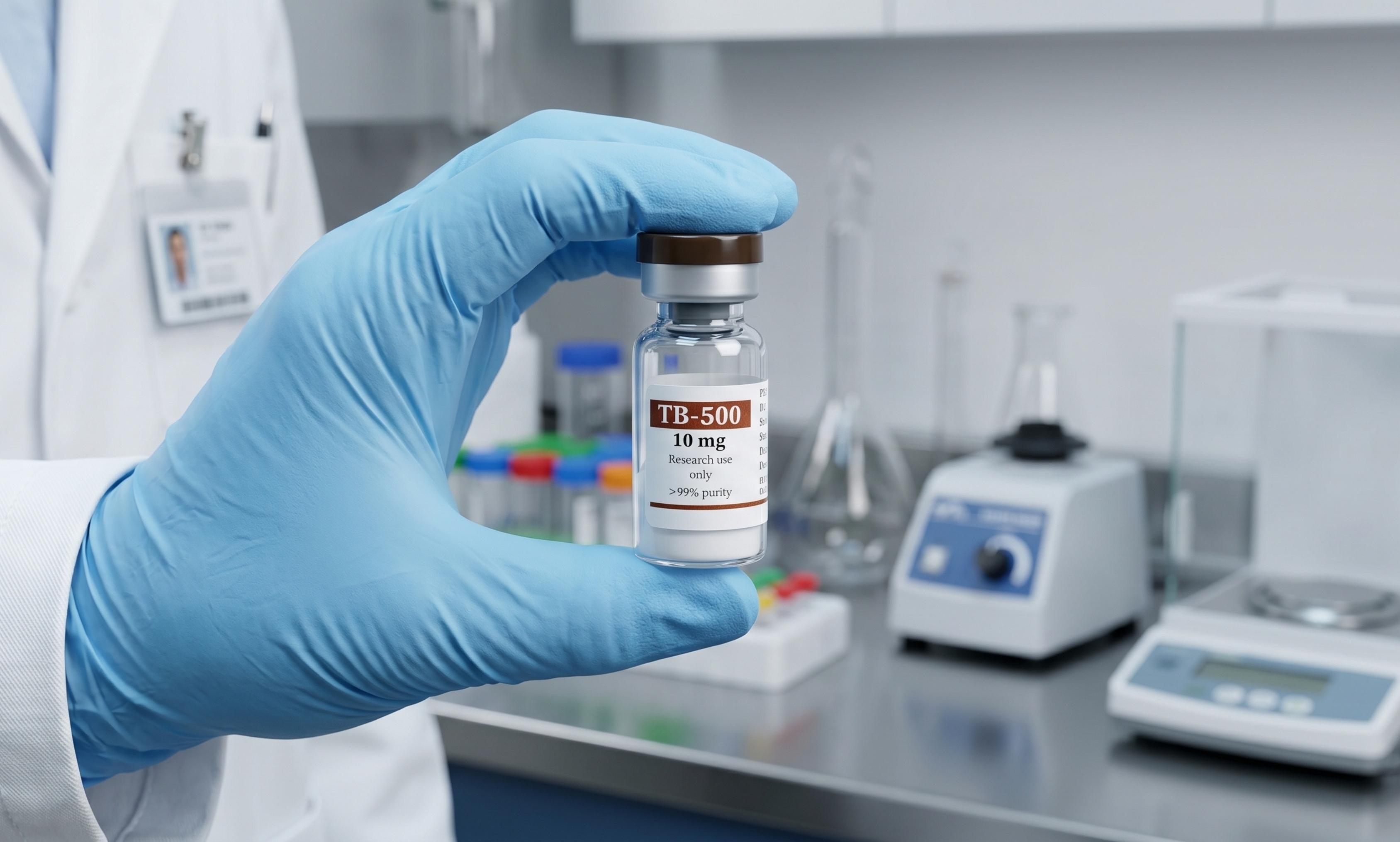
This section requires intellectual honesty about what we know, what we do not know, and how to reason responsibly in the gap between the two.
What “Long-Term” Actually Means Here
The longest human clinical trial following thymosin beta-4 participants ran to 180 days post-treatment. Beyond that point, there is no published human data. Not inconclusive data. Not reassuring data. Simply no data. Anyone claiming to know what happens with multi-year TB-500 use in humans is extrapolating beyond the evidence, regardless of which direction they extrapolate.
Theoretical Long-Term Concerns
Three domains of theoretical concern have been raised in clinical literature. None have been confirmed in human data. All are worth understanding:
- Sustained Angiogenesis Signaling: A loading phase of 4-6 weeks followed by a maintenance phase of several weeks involves sustained activation of angiogenic pathways. Short-term, this supports tissue regeneration and faster healing. Whether months or years of this signaling create cumulative vascular changes in healthy tissue is an unanswered question.
- Immune Modulation: TB-500 influences macrophage activity, shifting immune cells toward a repair-oriented state. This anti-inflammatory effect is central to reducing inflammation in acute injury contexts. Over a prolonged period, a sustained shift in immune cell behavior could theoretically affect immune surveillance, though no animal study spanning 6-12 months has shown increased infection rates or tumor incidence.
- Endogenous Peptide Regulation: Introducing exogenous peptides may signal the body to reduce its own thymosin beta-4 production over time, a mechanism well-understood in hormone replacement contexts. Whether this occurs with TB-500 supplementation, and to what extent, has not been studied.
Practical Guidance for Extended Use
Given these unknowns, the following approach reflects responsible use under medical supervision:
- Cycle TB-500 rather than using continuously. A standard loading phase followed by a maintenance phase, then an off period of 4-8 weeks, is the most commonly applied approach in clinical practice
- Do not extend beyond 12 weeks without clinical reassessment. At our clinic, we evaluate patient response before recommending any continuation beyond a standard cycle
- Maintain regular cancer screening per age-appropriate guidelines during and after any extended peptide use, particularly if you have elevated baseline cancer risk factors
- Document everything. Tracking your protocol, doses, injection sites, and any physical changes gives your healthcare provider meaningful data if anything unusual arises
Who Is and Isn’t a Good Candidate
Not everyone who wants to try TB-500 therapy is an appropriate candidate. And not everyone who has heard concerns about it needs to avoid it entirely. Here is a clear-eyed framework for thinking about candidacy.
Strong Candidates
TB-500 shows the most consistent reported benefits and the clearest clinical rationale for the following profiles:
- Patients recovering from acute soft tissue injuries: Muscle strains, ligament injuries, tendon damage, and sports injuries where conventional recovery is progressing too slowly. TB-500’s actin regulation and cell migration mechanisms directly address the biological bottlenecks in soft tissue repair.
- Individuals with chronic inflammation or chronic joint pain: For patients who have exhausted anti-inflammatory medications, physical therapy, and corticosteroid injections without achieving adequate joint mobility or pain reduction, TB-500’s systemic anti-inflammatory effects offer a mechanistically distinct approach.
- Post-surgical patients: Accelerated wound healing and tissue regeneration following surgical procedures, particularly orthopedic procedures affecting connective tissues, muscles, or joints. TB-500’s ability to drive efficient repair across multiple tissue types simultaneously is directly relevant here.
- Those combining with BPC-157 for comprehensive recovery: Patients whose injury profile benefits from both systemic repair (TB-500) and targeted local healing (the body protection compound BPC-157) are strong candidates for the Wolverine Stack under supervised protocols. This combination covers the full healing cascade from cellular migration to localized collagen synthesis.
Poor Candidates or Those Requiring Extra Caution
| Profile | Reason | Approach |
|---|---|---|
| Active cancer diagnosis | Angiogenesis contraindication | Do not use |
| Recent cancer history (2-5 years) | Theoretical risk, insufficient data | Clinical oncology review required |
| Pregnant or breastfeeding | No human safety data | Avoid entirely |
| Severe autoimmune conditions | Immune modulation effects unpredictable | Specialist review required |
| Blood thinner medications | Increased injection site bleeding risk | Provider assessment needed |
| Competitive athletes in tested sports | Banned by the World Anti-Doping Agency under S0 | Do not use in-competition |
| Unverified sourcing only | Contamination risk, no clinical oversight | Clinical supervision or avoid |
The Supervision Variable
Arguably, the most important determinant of whether TB-500 is safe for a specific individual is not the peptide itself but the framework around its use. The same compound administered after a thorough health evaluation, with verified pharmaceutical-grade material, under a structured protocol with regular check-ins, carries a fundamentally different risk profile than the same compound self-administered after reading a forum post.
This is why the candidacy question cannot be answered in isolation from the sourcing and oversight question. At Natura Dermatology & Cosmetics, our providers, including Dr. Will Richardson and Blair Ferguson, ARNP, conduct a full clinical evaluation before recommending any regenerative treatments. That evaluation covers cancer risk screening, current medications, injury history, and recovery goals. It is the same standard of care we apply to every other treatment we offer.
If you are considering peptide therapy for injury recovery, chronic inflammation, or post-surgical healing, a consultation is the right first step, not a vial from an online vendor.
Safe Peptide Therapy Starts at Natura Dermatology & Cosmetics
TB-500 is not reckless and it is not risk-free. The preclinical data is genuinely encouraging, the short-term human safety profile is favorable, and the side effects at standard doses are mild. What it is not is a compound anyone should be self-administering without a proper health evaluation first.
Key takeaways:
- Preclinical animal models show a strong safety profile with no organ toxicity, hormonal disruption, or cancer promotion at standard doses
- Phase I human trials found TB-500 well-tolerated, even at dramatically higher doses than typical protocols use
- The longest human follow-up period in any published trial is only 180 days, meaning long-term safety data simply does not exist yet
- Common side effects are mild and transient: injection site redness, brief fatigue, and occasional mild headaches
- TB-500 does not suppress testosterone, estrogen, or other hormones, making it appropriate for both men and women
- The cancer risk is theoretical, not documented, but anyone with active cancer or recent cancer history should avoid it entirely
- Contamination from unregulated sources is a real and documented risk, not a theoretical one
- Cycling TB-500 rather than using it continuously is the most responsible long-term approach
- Medical supervision changes the risk profile fundamentally: screening, verified sourcing, and structured monitoring are not optional extras
At Natura Dermatology & Cosmetics, we run a full health evaluation, cancer risk screening, and medication review before recommending any TB-500 protocol. Our providers use verified compounds and monitor your response throughout. Book a consultation and start your recovery the right way.
Frequently Asked Questions
What Does TB-500 Do in the Body?
TB-500 activates the body’s natural healing processes through actin regulation and cell migration, supporting tissue repair, reducing inflammation, and promoting faster recovery in muscles, tendons, and ligaments.
How Does TB-500 Affect the Heart?
Preclinical studies show TB-500 supports cardiovascular health by reducing scar tissue after cardiac injury. Its anti-inflammatory properties and regenerative treatments potential make it promising for myocardial recovery.
What Are the Side Effects of BPC TB-500?
Commonly reported side effects include injection site redness, brief fatigue, and mild headaches. These regenerative peptides are generally well-tolerated. Serious side effects are rare at standard doses.
How Many Times a Week Should I Inject TB-500?
TB-500 is typically administered twice weekly, spaced 3-4 days apart. This schedule sustains the healing process and delivers quicker recovery for individuals recovering from muscle or ligament injuries.
Does TB-500 Increase Hair Growth?
Yes. Among its potential benefits, TB-500’s synthetic version of thymosin beta-4 activates hair follicle stem cells and improves scalp circulation. Preclinical data supports this; human trials remain limited.
What Are the Negative Side Effects of Peptide Injections?
Commonly reported negatives include injection site irritation, temporary fatigue, and mild headaches. These typically resolve within days. Other peptides may carry additional risks depending on mechanism and dose.
What’s the Difference Between BPC-157 and TB-500?
BPC-157 targets localized tissue repair with strong anti-inflammatory properties. TB-500, a synthetic version of thymosin beta-4, works systemically for broader muscle recovery and performance enhancement across multiple tissue types.


