

Your scalp might be the last place you check for skin cancer. That’s a problem. Hidden beneath your hair, suspicious spots often go unnoticed until they’ve progressed. Scalp melanoma often goes undetected for longer than other types of melanoma, leading to worse outcomes.
This guide shows you exactly what to look for. We’ll break down the visual differences between basal cell carcinoma, squamous cell carcinoma, and melanoma on the scalp so you can spot trouble early.
In this article, you’ll learn:
- What each type of scalp skin cancer looks like
- The ABCDE rule for identifying suspicious moles
- Warning signs that require immediate attention
- How scalp skin cancer is diagnosed and treated
- Prevention tips to protect your scalp year-round
At Natura Dermatology, our mission centers on one thing: ensuring no one dies from melanoma through thorough full-body imaging and exams. If you’ve noticed something unusual on your scalp, our Fort Lauderdale team can help you get answers.
What Each Type of Scalp Skin Cancer Looks Like
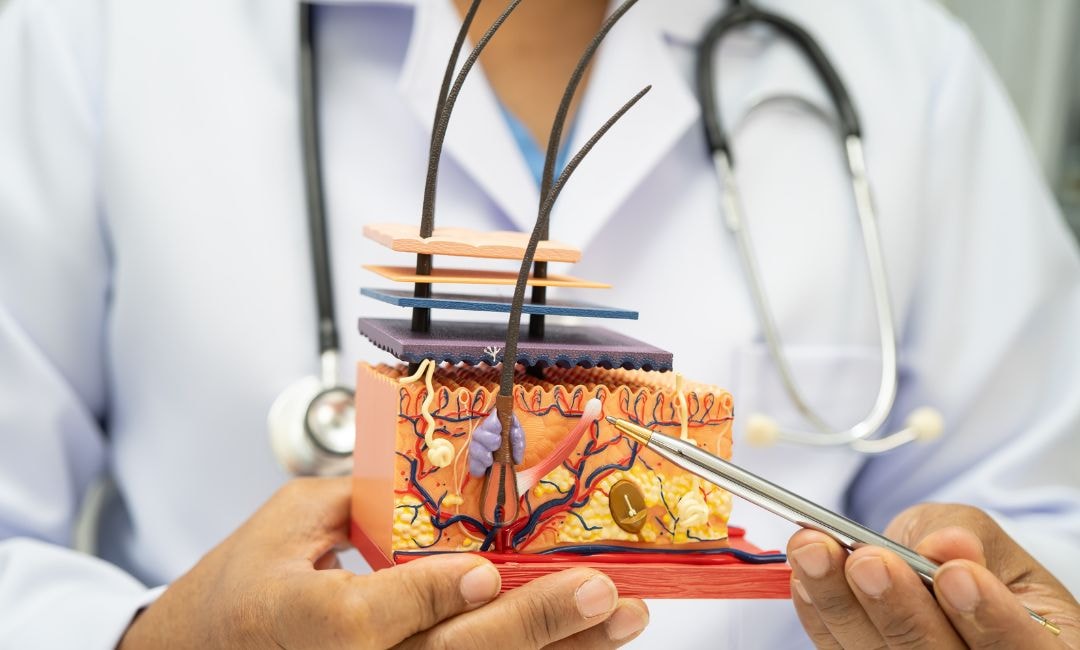
Three main types of skin cancer appear on the scalp: basal cell carcinoma (BCC), squamous cell carcinoma (SCC), and melanoma. Each looks different.
Basal Cell Carcinoma (BCC)
Basal cell carcinoma is the most common type of skin cancer and is more common on the head and neck than on other body parts. On the scalp, it typically appears as:
- A pearly or waxy bump with a shiny surface
- A flesh-colored or pinkish raised growth
- A sore that bleeds, heals, then returns
BCC grows slowly and rarely spreads. But left untreated, it can cause significant local damage.
Squamous Cell Carcinoma (SCC)
Squamous cell carcinoma is normally scaly and rough to the touch, due to a build-up of hard, dead skin. Look for:
- A red, scaly patch that may crust over
- A raised bump with a central depression
- An open sore that bleeds or won’t heal
SCC is more aggressive than BCC. It can spread if you don’t catch it early.
Melanoma
This is the most dangerous form. Scalp melanoma often goes undetected for longer than other types of melanoma, leading to worse outcomes. Warning signs include:
- A dark or multicolored spot with irregular borders
- A mole that changes in size, shape, or color
- A new growth that looks different from everything else
Ask your barber or hairstylist to flag anything unusual during your next cut. They see your scalp more often than you do.
The ABCDE Rule for Suspicious Moles
The ABCDE rule gives you a simple framework to identify skin cancer early. Use it during regular self-checks to evaluate any moles or dark spots on your scalp.
What Each Letter Means
| Letter | What to Look For |
|---|---|
| A – Asymmetry | One-half of the mole doesn’t match the other half |
| B – Border | Edges appear jagged, blurred, or irregular |
| C – Color | Different shades of brown, black, red, or blue within the same spot |
| D – Diameter | Larger than 6mm (about the size of a pencil eraser) |
| E – Evolving | Changes in size, shape, color, or texture over time |
Normal moles tend to be symmetrical, evenly colored, and stable. Melanoma skin cancer, on the other hand, often breaks at least one of these rules.
The “Ugly Duckling” Sign
Here’s another trick: look for the mole that doesn’t belong. Most people have a “signature” look to their moles. If one half of a spot looks drastically different from the rest, or if one mole stands out from the others, pay attention. That ugly duckling could be trouble.
Pro Tip:Take photos of unusual spots on your scalp and date them. This makes it easier to track evolving changes over time.
Warning Signs That Need Immediate Attention
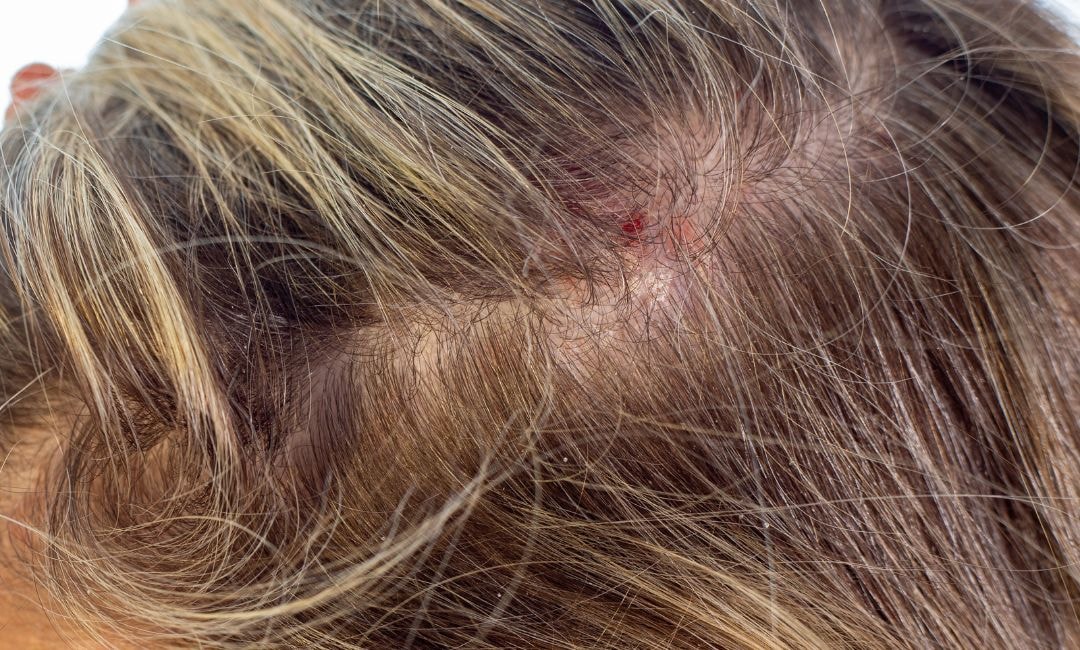
Some skin changes demand a same-week appointment. Don’t wait if you notice any of the following on your scalp:
- A sore that won’t heal after several weeks
- A pink growth or shiny bump that bleeds easily
- A dark spot with irregular borders or different shades
- A wart like growth that appears suddenly and keeps expanding
- Persistent itching, tenderness, or pain in one area
- A spot that crusts over, heals, then returns
Nodular melanoma is particularly sneaky. It often appears as a raised bump rather than a flat mole, and it can grow rapidly. If you see an elevated lesion that’s darker than your skin tone, get it checked.
People with thinning hair or bald spots face higher risk factors because more skin cells are directly exposed to UV radiation. The same goes for anyone with blond or red hair, a fair complexion, or a personal history of sunburns.
Bottom line:If something looks or feels off, trust your instincts. Early diagnosis leads to better outcomes.
How Scalp Skin Cancer Is Diagnosed and Treated
Let’s find out.
The Diagnostic Process
Your dermatologist will start with a visual exam of your entire scalp, parting through thick hair to check for unusual spots. They may use a dermatoscope, a handheld magnifying tool that reveals blood vessels and pigment patterns invisible to the naked eye.
If something looks suspicious, the next step is a biopsy. A small tissue sample is removed and sent to a lab, where a pathologist examines the abnormal cells under a microscope. This confirms whether cancer cells are present and identifies the specific type.
Treatment Options
Treatment depends on the type of skin cancer, its size, and how deep it has grown. Common approaches include:
- Surgical excision: The cancerous tissue is cut out along with a margin of healthy skin
- Mohs surgery: Layers of tissue are removed one at a time and examined under a microscope until no cancer cells remain. This is the gold standard for basal cell skin cancer and squamous cell skin cancer on the scalp because it preserves healthy tissue while achieving high cure rates.
- Curettage and electrodesiccation: The tumor is scraped away and the base is treated with an electric current
- Cryotherapy: Liquid nitrogen freezes and destroys precancerous growths like actinic keratosis
- Radiation or immunotherapy: Reserved for advanced cases or when surgery isn’t an option
At Natura Dermatology, Dr. Will Richardson specializes in Mohs surgery for skin cancers on the face, scalp, and neck. This precise technique removes cancer layer by layer while sparing as much healthy tissue as possible. For patients concerned about scarring or recurrence, Mohs offers both effective treatment and cosmetic preservation.
Prevention Tips for Year-Round Protection
Your scalp sits at the highest point of your body. It catches more direct sun exposure than almost any other skin. Yet most people skip it entirely when applying sunscreen.
Here’s how to protect yourself:
Wear the Right Hat
Baseball caps only cover about a quarter of your head. Your ears, neck, and the back of your scalp remain exposed. Instead, choose a wide-brimmed hat made from tightly woven fabric. Look for a UPF 50+ rating for maximum protection against UV radiation.
Apply Sunscreen to Your Scalp
If you have thinning hair or visible part lines, apply sunscreen directly to those sun-exposed areas. Choose a broad-spectrum SPF 30 or higher. Options include:
- Spray formulas that mist evenly without making hair greasy
- Powder sunscreens that absorb oil and blend into the scalp
- Stick sunscreens for easy application along the hairline
Reapply every two hours, or immediately after sweating or swimming.
Schedule Regular Self Checks
Use a handheld mirror or ask a partner to examine your scalp monthly. Part your hair in sections and look for any new growths, dark spots, or skin changes. If you have darker skin, pay close attention to color variations. Melanoma can appear on any skin tone, though it may look different on darker-skinned people.
Get Annual Professional Exams
Self-exams are helpful, but they’re not a substitute for a trained eye. A dermatologist can spot other skin cancers you might miss, including Merkel cell carcinoma and seborrheic keratosis that may look suspicious.
Natura Dermatology’s mission is simple: ensure no one dies from melanoma through thorough full-body imaging and exams. Our Fort Lauderdale team performs comprehensive scalp screenings as part of every skin check. If you’re overdue for an exam or you’ve noticed something unusual, book an appointment with Dr. Richardson or one of our providers. Catching problems early is always the goal.
Protect Your Scalp With Natura Dermatology
Your scalp deserves the same attention as the rest of your skin. Now that you know what to look for, you can catch problems early and take action before they become serious.
Key takeaways:
- Basal cell carcinoma appears as pearly bumps or pink lesions; squamous cell shows as scaly, rough patches
- Use the ABCDE rule to evaluate moles: Asymmetry, Border, Color, Diameter, and Evolving changes
- Sores that won’t heal, spots that bleed easily, or growths that keep changing require immediate attention
- Mohs surgery offers the highest cure rates for scalp skin cancers while preserving healthy tissue
- Wear UPF 50+ wide-brimmed hats and apply sunscreen to thinning areas and part lines
- Schedule annual skin exams with a dermatologist who checks your entire scalp
Natura Dermatology is committed to early detection through comprehensive full-body imaging and scalp screenings. Our Fort Lauderdale team, led by Dr. Will Richardson, specializes in identifying and treating skin cancers before they spread. Book your skin exam today.
FAQs
What does scalp skin cancer look like?
It varies by type. The most common skin cancer, basal cell carcinoma, often appears as pearly bumps or a pink lesion that won’t heal. Squamous cell looks like rough, scaly patches. Melanoma shows as a dark spot with irregular borders or multiple colors.
What can be mistaken for scalp cancer?
Seborrheic keratosis, psoriasis, eczema, and warts can all mimic skin cancer. A minor injury that scabs over might also look suspicious. The only way to know for sure is through a professional exam and biopsy.
How serious is skin cancer on the scalp?
It can be very serious. Scalp melanomas tend to be diagnosed later and have lower survival rates than melanomas elsewhere. Without treatment, some cancers can spread to other organs. Early detection dramatically improves outcomes.
What does a cancer lump on the scalp look like?
It may appear as a firm, raised bump that’s flesh-colored, pink, or pearly. Some lumps bleed easily or develop a central depression. Any new lump that keeps growing should be examined promptly.
What does pre-cancer skin look like?
Actinic keratosis, the most common pre-cancer, appears as rough, scaly patches on places exposed to sun. These spots may feel like sandpaper and can be red, pink, or skin-colored. People of older age with fair skin are most at risk.
Can you identify skin cancer from a photo?
Skin cancer images can help you recognize warning signs, but they cannot replace a professional diagnosis. A skin cancer image gallery is useful for learning what to look for, but always consult a dermatologist for confirmation.
What are the signs of skin cancer on your scalp?
Watch for new or changing growths, sores that don’t heal, pearly bumps, dark spots, or scaly patches. Bleeding, itching, or tenderness in one spot can also signal a problem. Any skin exposed to sun regularly is at risk.
Does melanoma on the scalp hurt?
Usually not in the early stage. Most melanomas are painless initially, which is why visual checks matter so much. As it progresses, some people notice itching or tenderness. Don’t wait for pain to get checked.


