

US customs data shows peptide imports from China hit $328 million in just the first three quarters of 2025, double the figure from the same period a year earlier. That number tells you two things: demand for peptides like BPC-157 and TB-500 is surging, and most of that supply is coming from completely unregulated sources.
Knowing where to buy matters just as much as knowing what to buy. The wrong source means unknown purity, no quality assurance, and zero recourse if something goes wrong.
Here’s what this guide covers:
- The legal landscape: what “research chemical” actually means and why it matters
- What to look for in a legitimate peptide source (and major red flags to avoid)
- Online vendors vs. medical clinics: a straight comparison
- How purity standards and third-party testing protect you
- Why medical supervision changes everything about the sourcing equation
At Natura Dermatology & Cosmetics, we offer peptide therapy through proper medical channels, not research chemical loopholes. Our providers evaluate your health profile first, then build a protocol around it.
The “Research Chemical” Label: What It Really Means
Walk onto any online peptide vendor’s site today, and you’ll see the same language plastered everywhere: “For research purposes only. Not for human consumption.” That disclaimer is not a quality guarantee. It is a legal shield.
Under federal law, selling injectable peptides like BPC-157 and TB-500 is technically permissible as long as vendors market them strictly for laboratory settings and research applications, not for human use.
The FDA knows full well that most buyers are not running laboratory experiments. But as long as sellers avoid making therapeutic claims or providing dosing instructions for human consumption, they generally stay out of regulatory crosshairs.
This is what the peptide market runs on. It is a legal fiction everyone participates in.
What the FDA Actually Classifies These as
Both BPC-157 and TB-500 fall under the FDA’s Category 2 Bulk Drug Substances list, meaning the agency has identified them as substances with potential safety concerns and insufficient human clinical data to support compounding for medical use. That classification has real consequences:
- Compounding pharmacies cannot legally produce these peptides for patients under Section 503A of the Food, Drug, and Cosmetic Act
- No licensed provider can formally prescribe them through standard medical channels
- Any product sold for human use as a supplement is considered misbranded and illegal
The Regulatory Timeline Is Shifting
Recently, the FDA updated its 503A bulk drug substances list and moved BPC-157 and TB-500 toward formal review by the Pharmacy Compounding Advisory Committee (PCAC), with hearings scheduled for July 23-24, 2026.
This is the most significant regulatory movement for these peptide therapies in years. The outcome of those hearings will shape whether compounding pharmacies can legally produce them again.
What This Means for You Right Now
| Route | Legal Status | Quality Assurance | Medical Oversight |
|---|---|---|---|
| Online research vendor | Gray area | Variable | None |
| Compounding pharmacy | Currently restricted | Regulated | Requires prescription |
| Medical clinic (supervised) | Clinician-guided | Provider-vetted | Full |
| Amazon/supplements | Misbranded if therapeutic claim | None | None |
The bottom line: if you inject a peptide sourced from a research chemical vendor and something goes wrong, you carry all the liability. No quality control guarantee, no recourse, and no medical oversight to catch problems early.
At Natura Dermatology & Cosmetics, we stay current on FDA regulatory changes and operate within established legal frameworks. Our providers, including Dr. Will Richardson and Blair Ferguson, ARNP, prioritize your safety over convenience.
What Makes a Legitimate Peptide Source
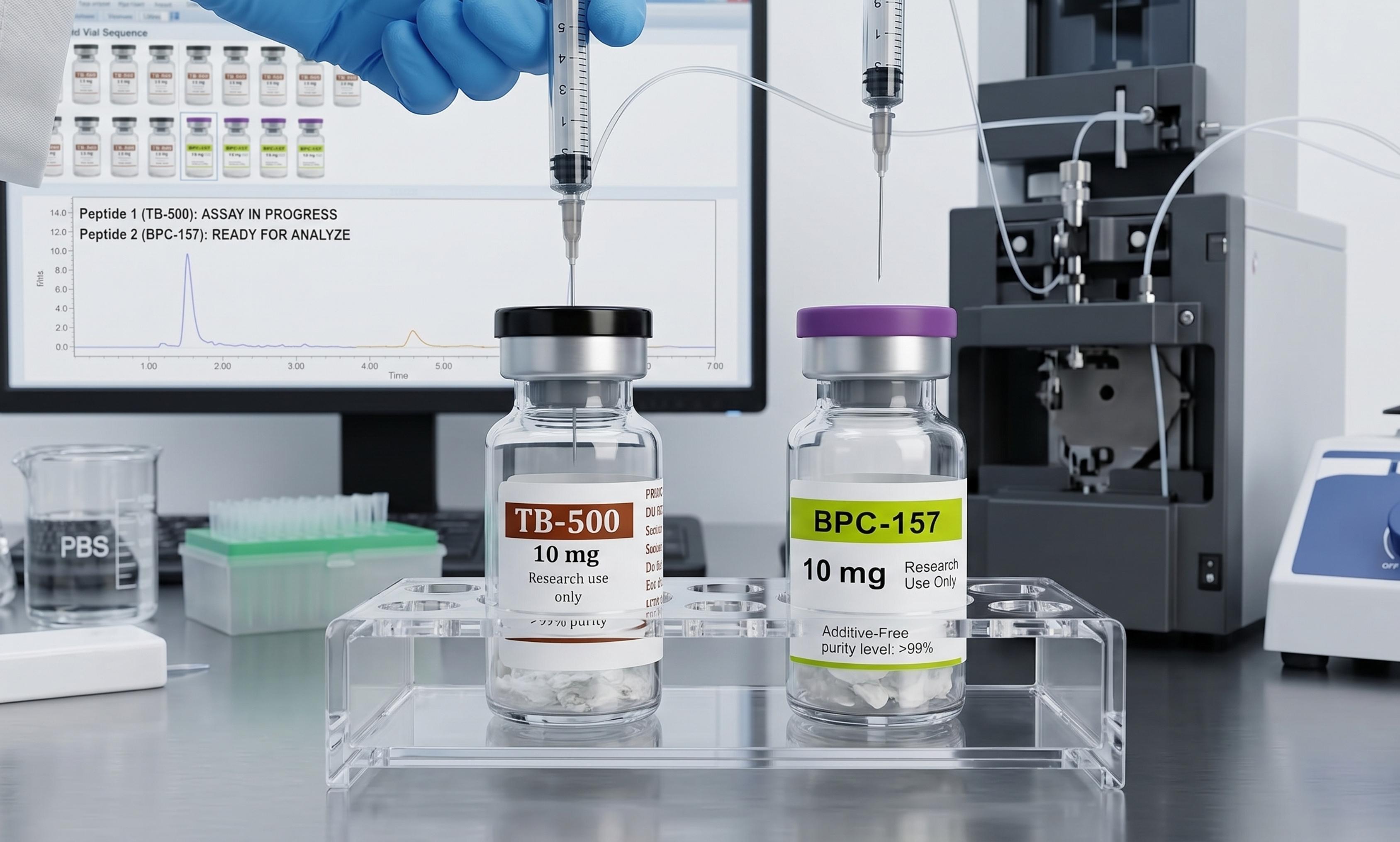
The peptide market is genuinely flooded with low-quality products. US customs data shows peptide imports from China nearly doubled in 2025, much of it passing through with no meaningful quality control. Knowing what separates a credible source from a risky one is not optional if you’re serious about recovery.
Green Flags: What to Look For
Here’s what to look for:
1. Batch-specific, third-party Certificates of Analysis (COA)
This is non-negotiable. Every legitimate source should provide a COA from an independent lab, tied to the specific batch you’re receiving, not a generic PDF recycled across products. The COA should include:
- HPLC (High-Performance Liquid Chromatography): Confirms the purity percentage of each amino acid sequence in the vial
- Mass spectrometry: Confirms the exact molecular identity of the synthetic peptide
- Endotoxin (LPS) testing: Confirms the product is free from bacterial contamination
- Sterility testing: Confirms absence of bacteria and mold
For injectable peptides, the minimum acceptable purity is 99%+. Anything lower introduces unknowns into an already high-stakes situation.
2. US-based fulfillment and lyophilization
Many vendors import pre-filled vials from overseas and simply relabel them. Domestic lyophilization (the freeze-drying process that stabilizes the peptide in powder form) means the vendor has direct quality control over the final product before it reaches you. It also eliminates customs seizure risk, which is both a legal and a stability concern.
3. Transparent contact and return policy
Legitimate vendors have real customer service channels, not just a payment page. If a vendor offers no return or reship policy, they are not standing behind their product.
Red Flags: Walk Away From These
- No COA available or only in-house testing: Self-reported purity numbers mean nothing without independent verification
- Pricing significantly below market: For context, reputable BPC-157 runs roughly $6-10 per mg. Anything dramatically below that signals a quality problem
- Cryptocurrency payments only: Reputable vendors accept multiple payment methods
- Therapeutic claims or dosing instructions for humans: This means the vendor is operating outside the research-only framework and inviting FDA action
- No lot numbers on packaging: Legitimate products have batch traceability
Online Vendors vs. Medical Clinics
This is the comparison most sourcing guides skip entirely because vendor-focused sites have a financial reason not to make it. Here is the straight version.
Online Research Vendors
Research vendors operate in the gray area described above. They sell BPC-157, TB-500, and blended formulations as research compounds. The better ones provide solid COA documentation, US-based fulfillment, and transparent pricing. The worse ones sell an underdosed or contaminated product with no accountability.
Even from a top-tier vendor, you are still:
- Self-diagnosing your treatment goals
- Self-dosing without clinical context
- Self-administering injectable peptides without sterile technique guidance
- Assuming full legal and medical liability for any outcome
- Operating without cancer screening or contraindication review, which matters for angiogenic signaling pathways in both compounds
Medical Clinics Under Supervision
A medically supervised peptide therapy program is a fundamentally different experience. Your provider evaluates your health history, confirms you have no contraindications (including cancer risk factors that intersect with angiogenesis mechanisms), and builds a protocol matched to your specific recovery goals.
The combined action of both peptides, BPC-157’s localized tissue repair and TB-500’s systemic cell migration, is most effective when dosing is calibrated to the individual. That calibration requires clinical judgment, not a forum post.
| Factor | Online Vendor | Medical Clinic |
|---|---|---|
| Product source | Research chemical | Provider-vetted supply |
| Dosing guidance | None (for legal reasons) | Personalized protocol |
| Contraindication screening | None | Full health evaluation |
| Sterile administration | Self-managed | Clinical setting |
| Follow-up and monitoring | None | Structured check-ins |
| Legal protection | Buyer assumes all risk | Provider-patient framework |
| Cancer/angiogenesis risk review | None | Standard of care |
For anyone using these peptides for wound healing, injury recovery, chronic inflammation, or post-surgical tissue regeneration, the clinical route is the responsible one. The research vendor route exists as an option, but it is not a substitute for medical oversight.
Purity Standards and Third-Party Testing
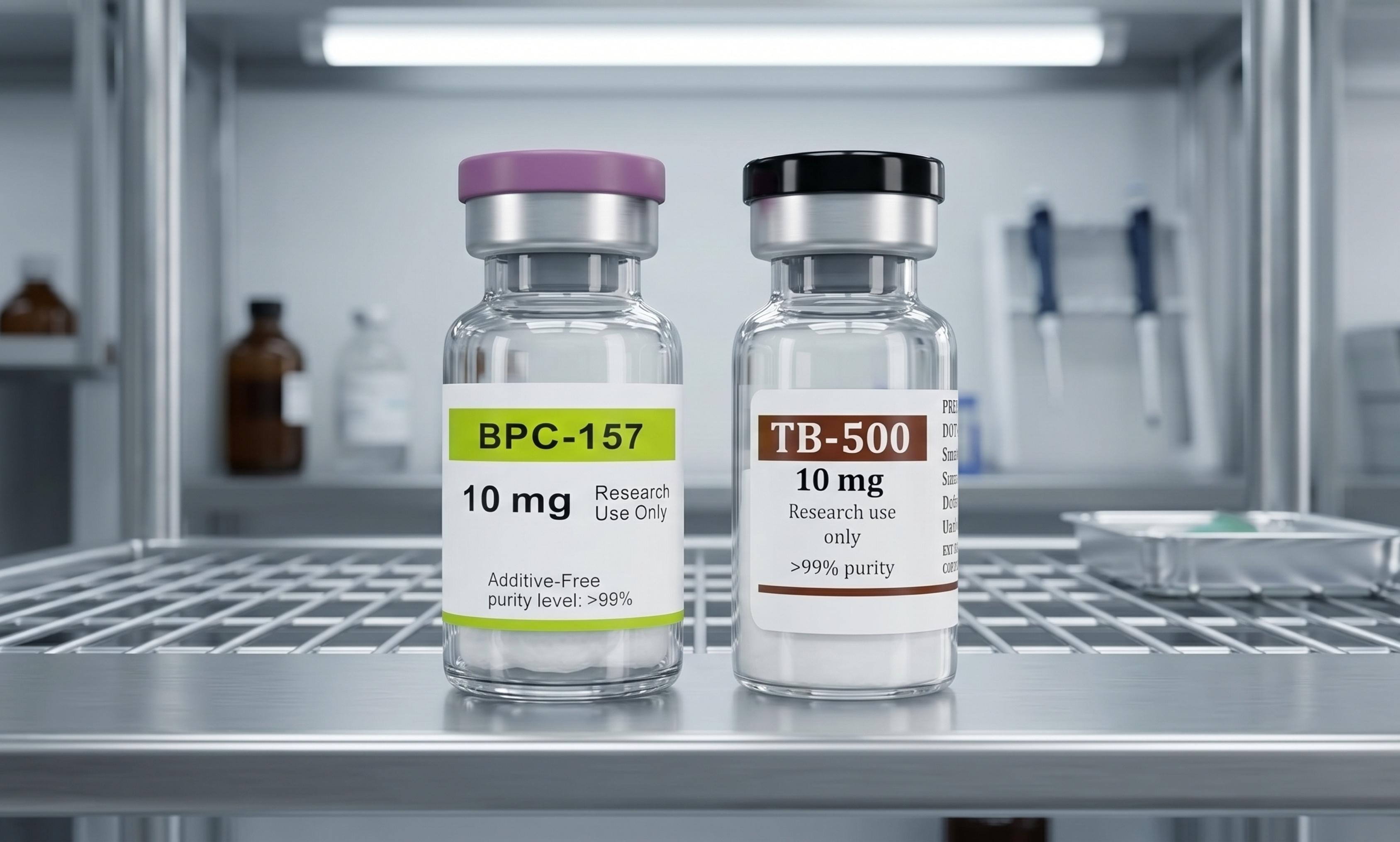
Most people buying peptides online never actually read the COA. They see the words “third-party tested” and assume that’s enough. It isn’t. Knowing what the COA actually measures changes how you evaluate a source.
The Testing Methods That Matter
- HPLC (High-Performance Liquid Chromatography): This is the standard method for confirming peptide purity. It separates the components in a sample and quantifies what percentage of the total is the target compound. For injectable peptides like BPC-157 and TB-500, purity should read 99%+ on HPLC. Anything below 98% introduces meaningful impurity risk when you inject it.
- Mass Spectrometry: HPLC tells you how pure something is. Mass spectrometry tells you what it actually is. It confirms the exact molecular weight and amino acid sequence of the synthetic peptide in the vial, verifying that what’s labeled matches what’s inside. This matters because some vendors substitute cheaper peptide fragments with similar names.
- Endotoxin (LPS) Testing: Bacterial endotoxins are the most common contamination risk in injectable research compounds. Even a sterile-looking vial can carry lipopolysaccharides (LPS) from gram-negative bacteria that cause serious inflammatory responses when injected. A legitimate COA includes endotoxin levels measured in EU/mg, with results well below the injectable threshold.
- Sterility Testing Confirms the absence of bacteria, mold, and yeast in the vial. This is especially critical for injectable peptides intended for subcutaneous or intramuscular use.
How to Verify a COA Is Real
A batch-specific COA from a reputable independent lab (names like Janoshik Analytical or MZ Biolabs appear frequently in legitimate vendor documentation) should be verifiable directly on the lab’s website using the lot number. If a vendor’s COA cannot be cross-referenced externally, treat it as unverified.
Pro tip: Never accept a COA that isn’t batch-specific. A single generic PDF used across multiple product listings is a clear sign the testing either didn’t happen or doesn’t correspond to what you’re buying.
Why Medical Supervision Changes Everything
There’s a version of this conversation that focuses entirely on where to buy, as if sourcing is the whole problem. It isn’t. The bigger issue is how these compounds are used, and whether anyone with clinical training is involved in that decision.
The Risks That Self-Sourcing Cannot Address
Both BPC-157 and TB-500 work through angiogenic signaling pathways, specifically by promoting new blood vessel formation and cell migration to support tissue repair and tissue regeneration. That mechanism is exactly what makes them effective for healing. It’s also why they carry a theoretical concern for anyone with undiagnosed cancer or a history of malignancy: angiogenesis supports both wound repair and tumor growth.
Without clinical screening before starting a peptide protocol, that risk goes completely unaddressed. A qualified provider runs the health evaluation that catches these contraindications. A research vendor puts a disclaimer on the checkout page and moves on.
Beyond the cancer consideration, medical supervision covers:
- Dosing precision: The combined effects of BPC-157 and TB-500 are amplified when stacked. Getting the ratio and timing right requires clinical judgment, not a forum thread
- Injection technique: Improper subcutaneous injection creates infection risk, inaccurate dosing, and unnecessary injection site reactions
- Protocol adjustment: A provider can shift you from loading to maintenance phase based on real response data, not a generic timeline
- Drug interaction review: Both peptides interact with vascular and inflammatory pathways that may overlap with medications patients are already taking
- Progress monitoring: Tracking wound healing rates, joint mobility, and inflammation markers over time requires clinical eyes, not self-assessment
The Natura Approach
At Natura Dermatology & Cosmetics, our providers do not use the research-chemical loophole. Our peptide therapy program is built on a full clinical evaluation of each patient, health history review, and a protocol designed around your specific recovery goals, whether that’s faster recovery from a tendon injury, reduced inflammation from a chronic condition, or post-surgical tissue regeneration.
Alexis Jennings, APRN, and the rest of our clinical team walk you through every step, from what to expect in the loading phase to how we assess progress before transitioning to maintenance. You are not guessing at results. You are working with providers who are accountable for your outcomes.
That accountability is what separates clinical peptide therapy from buying a vial off a website and hoping for the best.
Get Your Peptides the Right Way at Natura Dermatology & Cosmetics
Where you source BPC-157 and TB-500 is not a minor detail. It determines purity, safety, and whether anyone medically qualified is overseeing your protocol. The research chemical route exists, but it puts every risk squarely on you.
Key takeaways:
- “Research chemical” is a legal label, not a quality guarantee or safety endorsement
- Both BPC-157 and TB-500 are FDA Category 2 substances, currently restricted from compounding pharmacy production
- The FDA PCAC hearings scheduled for July 23-24, 2026, will significantly shape future access
- A legitimate source provides batch-specific, third-party COAs with HPLC, mass spectrometry, and endotoxin testing
- Purity below 99% in injectable peptides introduces a meaningful contamination risk
- Online vendors cannot screen for cancer risk, drug interactions, or contraindications; a qualified provider can
- Medical supervision covers dosing precision, protocol adjustment, and progress monitoring that self-sourcing simply cannot replicate
If you’re serious about peptide therapy for tissue repair, injury recovery, or chronic inflammation, our team at Natura Dermatology & Cosmetics handles the sourcing, the protocol, and the oversight. Book a consultation and get the results you’re actually after.
Frequently Asked Questions
Can BPC-157 Cause Liver Damage?
No evidence confirms BPC-157 causes liver damage. Researchers note this body protection compound actually shows protective effects on the stomach and organ tissue under stress conditions.
What Will BPC-157 Do to Your Body?
BPC-157 enhances tissue repair, improves circulation, and reduces pain. Its signaling molecules support recovery in muscles, ligaments, and tendons, with researchers noting benefits across multiple body systems.
Is It Safe to Combine BPC-157 + TB-500?
Generally yes. This combination is widely used in practice. Thymosin beta fragment TB-500 and BPC-157 enhance each other’s recovery benefits across muscles and ligaments when used responsibly.
How Long Does BPC-157 Stay in Your Body?
BPC-157 clears relatively quickly. Its synthetic version is designed for stability, but most researchers account for a short active window, making consistent dosing essential for recovering patients.
Can BPC-157 Help After Surgery?
Yes. BPC-157 supports post-surgery healing by promoting circulation, reducing pain, and enhancing protein synthesis in damaged ligaments and muscles, helping patients recover from procedures faster.
Does BPC-157 Affect Growth Hormone?
BPC-157 interacts with growth hormone receptor pathways, potentially enhancing its activity. Researchers note this ability may contribute to longevity benefits and improved cellular communication during recovery.


